Thursday, 7 July 2011

Gather round to hear Simon Blackburn destroy the government's ideas

Now I'm on p. 24 Times Higher Education magazine, I think I can rightfully call Professor Blackburn (Philosophy, Cambridge University) my colleague.

I ranted about the government's Higher Education White Paper, and good sarcastic knockabout stuff it was too. But the good professor uses philosophy to take the government outside, stamp on its glasses and duff it up good and proper. Some extracts:

Forty-five years ago when I had to decide on a career, it was a glittering prize to go on to doctoral studies and thence to gain a post in a good university. Now with students shouldering what is perceived as a crippling level of debt, and only a bureaucratically hag-ridden and demoralised profession to enter at the end of it, one wonders how anybody is motivated to do so - and indeed there are worrying signs that many are not. They cannot be blamed, especially as there are many fewer grants available for postgraduate studies. The Arts and Humanities Research Council, for example, has significantly cut the number of postgraduate grants it gives out in favour of shovelling money into Mickey Mouse projects that it imagines to be vaguely associated with the prime minister's "Big Society" agenda or, as we learned last week, sponsoring X Factor style competitions for dramatic young lecturers. (For its New Generation Thinkers scheme, the AHRC worked with BBC Radio 3 to find young researchers who could make "fascinating" radio programmes about their academic work.)


I am entirely in favour of providing potential students with as much information as they can use when they choose a university or a course. But it is interesting that even that great liberal and apostle of free exchange, John Stuart Mill, had doubts about the value of free choice when it came to education. As he famously said: "The uncultivated cannot be competent judges of cultivation. Those who most need to be made wiser and better, usually desire it least, and if they desired it, would be incapable of finding the way to it by their own lights." In other words, if potential students care mainly about the quality of the clubbing in the city housing the university, they are unlikely to pay much attention even to the salaries its graduates achieve, let alone other indicators of the kind of cultivation it offers. Few parents closely acquainted with teenage decision-making will place bets on the wisdom or sanity of the choices that will be made, even if they have no option but to let their children get on with it.

One might also wonder whether the reward structures of society are so unquestionably healthy as to play this role in directing student choice. It is understandable that a young person might want to be a mathematician who works in the City, devising schemes for making money out of financial bubbles, as opposed, let us say, to being a social worker. But I do not entirely approve of universities advertising that this is the choice to make, nor telling themselves that they exist to facilitate it. 
universities will quickly turn their admissions offices into sales departments, anxiously scanning the zeitgeist for the next hook with which to lure students. There will be even more glossy brochures with pictures of happy young people drinking coffee and kicking balls about. But will these blandishments translate into meeting their needs? 


 it is more admirable, and more enviable, and more likely to yield a degree of self-knowledge, to be living with an active and well-stocked mind than without. A person can properly be quietly proud of his or her achievements and understanding, whereas taking pride in possessions and wealth is more likely to be vanity or narcissism. As John Ruskin said, there is no wealth but life, and it is the quality of life that universities exist to nourish.

Expanding the understanding and imagination of students is a great task. It can be done only by people whose own understandings and imagination are in good order, which is the reason why good teaching and the desire to contribute to a subject go together. Just as it does not talk about the needs of teachers, the White Paper does not talk of research - apparently there was to be a chapter on that, but nobody knew what to say, and it has been deferred to another document due in the autumn. 
Perhaps we should not have expected better. The problems of funding higher education are real enough. Once it was determined that it was students who were to bear the cost, rather than general taxation, then indeed, as the president of the Oxford University Student Union well said, lipstick had to be found to put upon the pig. Honeyed words about the student experience were perhaps the best cosmetic available.
What an ironic shame that studying philosophy at Cambridge will become the preserve of the well-heeled to an even greater degree than now, should the government get its way.

News of the World: Why It's Your Fault

You may have noticed that there's a massive campaign afoot to make corporations drop their advertising in the News of the World.

OK, so far so bad. The newspaper has illegally accessed the telephones of politicians, entertainers, a murdered teenager, murdered kids' parents, terrorism victims' friends and families and dead soldiers' families.

But we shouldn't be fooled into thinking that these advertisers (and the Royal British Legion, which has just dropped its 'relationship' with the paper) are in any way better than the News of the World. These allegations have been public knowledge, to some extent, for several years. More widely, the News of the World, the Daily Mail, the Sun, the Express and other papers have been using illegal methods to gather information for decades. You can spot the guilty papers by their lack of coverage of this story over recent years.


Basically: the advertisers know what newspapers do. They've forked over millions of pounds to tabloids which explicitly specialise in vicious, bitter, moralistic, hypocritical, prurient, titillating gossip for decades. To suddenly decide that they can't (temporarily) stand it any longer isn't a sign that these companies exist on a higher moral plane than the papers. For all their handwringing ('I'm shocked, shocked, to find that gambling is going on in here'), they don't have moral values. They have accountants, and they have PR departments, who are both telling them that the outrage dollar (as Bill Hicks would have it) is more lucrative than the News of the World dollar, for now.

Which brings me to my final point. Why do major corporations advertise in the News of the World? Because it's the best-selling Sunday newspaper in the UK. Why is it the best-selling newspaper in the UK? Because millions of otherwise un-evil citizens make a deliberate choice of a Sunday to read vicious, bitter, moralistic, hypocritical, prurient, titillating gossip. Sure, individuals aren't responsible for the cultural soup in which they swim, but you have a choice. You could decide that the sex lives of TV weather presenters, Bolton's second-string fullback, and Big Brother losers simply isn't news, or relevant to you. You could decide that if you really must leer over the breasts of a teenage girl, to have some guts and buy an actual porn mag, or head to the internet, where I'm told flesh is easily found. You could stop dialling the sex-lines which fill the back pages. You could make a resolution to avoid the shrieking racism which pervades these repulsive papers.

And if you're reading this smugly congratulating yourself for not being a News of the World reader, you can wipe that smile off your face, particularly if you have a Sky subscription. 'Oh', you might be whinging, 'I've no choice. I love Boardwalk Empire, and big movies, and live sport, Vole, how can I live without live sport?'. Tough. They're all just commodities, sticky open jam pots designed to suck you in and sell you to advertisers - despite the fact that you've paid a subscription too. If you like films, go to the cinema or even better, the theatre, and make an occasion of it. Read a book. Sports fans: go to a live match, or play in one. Every penny you give to News International or one of its competitors - because blaming NI alone is to deny that there's a structural political, economic and cultural problem - you don't just fund what you're watching. You reward the News of the World and its friends. Ironically, paying to watch your favourite footballer perform involves paying for the 'celebrity news' which has replaced actual news, and funds the hacking, telephoto lens, kiss-and-tells and all the other paraphernalia which will be turned on that very footballer if a media outlet senses sales in the offing.

This isn't new: here's an extract from George Orwell's 1946 The Decline of the English Murder:

It is Sunday afternoon, preferably before the war. The wife is already asleep in the armchair, and the children have been sent out for a nice long walk. You put your feet up on the sofa, settle your spectacles on your nose, and open the News of the World. Roast beef and Yorkshire, or roast pork and apple sauce, followed up by suet pudding and driven home, as it were, by a cup of mahogany-brown tea, have put you in just the right mood. Your pipe is drawing sweetly, the sofa cushions are soft underneath you, the fire is well alight, the air is warm and stagnant. In these blissful circumstances, what is it that you want to read about?
Naturally, about a murder.
With all this in mind one can construct what would be, from a News of the World reader's point of view, the "perfect" murder. The murderer should be a little man of the professional class — a dentist or a solicitor, say — living an intensely respectable life somewhere in the suburbs, and preferably in a semi-detached house, which will allow the neighbours to hear suspicious sounds through the wall. He should be either chairman of the local Conservative Party branch, or a leading Nonconformist and strong Temperance advocate. He should go astray through cherishing a guilty passion for his secretary or the wife of a rival professional man, and should only bring himself to the point of murder after long and terrible wrestles with his conscience. Having decided on murder, he should plan it all with the utmost cunning, and only slip up over some tiny unforeseeable detail. The means chosen should, of course, be poison. In the last analysis he should commit murder because this seems to him less disgraceful, and less damaging to his career, than being detected in adultery. With this kind of background, a crime can have dramatic and even tragic qualities which make it memorable and excite pity for both victim and murderer. 

So when anyone wonders out loud whose fault it is, you can tell them: it's your fault. You buy the papers. You accept that celebrity gossip is news. You somehow have a definite opinion on who killed Maddie McCann. You let the tabloids define the terms for debates on anything from immigration to public sector pensions. The word you're looking for is 'complicit'.

Who hacked those phones? You did.

(And as an aside: given this week's events, I hope all you snobs will now revise your opinions about media studies).

Wednesday, 6 July 2011

Books that come in pairs

I've just received the wonderful Helen Walsh's new book, Go To Sleep. The cover blurb reads:
Devastatingly honest and shockingly painful at times, Go To Sleep is a heart-wrenching story about one woman and her newborn child. It strips motherhood bare in the most unforgettable of ways. 
Oddly, there's another book out, called Go The F*ck To Sleep (not my censorship) by Richard Cortes. It's similarly about a crazed, sleep-deprived parent trying to cope with a babe which won't ever sleep.

And no, I didn't buy the former thinking it was the latter. I really enjoyed Walsh's Brass. I'm not a parent as far as I know (joking, mother), but I recognise a distinctive voice when I hear one. Though Go The F*ck To Sleep is something I regularly shout at my next-door neighbour and the noisy bastards who use my building as a rendezvous for knife-fights and intoxicated domestic arguments.

Here are the rather contrasting styles of the books: readings by Walsh and Samuel Jackson respectively:


In honour of the News of the World Phone Hackers, some Jim Hacker

I love the fact that this entirely accurate assessment of British newspapers and their control over the political class is delivered by the fictional Prime Minister, Mr. Jim Hacker. The News of the World is the Sunday edition of The Sun).


and if that doesn't float your boat, here's some Miss Kittin and The Hacker:

Murdoch and the Gothic, together at last

I'm not sure if you've noticed, but there's a massive upsurge of interest in postwar Gothic satirist Mervyn Peake, whose magnum opus, the Gormenghast Trilogy, is a masterpiece of vicious evil set in a dusty, inward-looking, tradition-bound castle clearly analogous for Britain.

Into the etiolated, hidebound institution comes Steerpike, a vicious, amoral narcissist intent on motiveless malignity, as Shakespeare describes Iago in Othello.

Given recent events with the News of the World, I can't help seeing Murdoch and his minions as Steerpike. Luckily, Zoot Horn sent me his scans of Peake's drawings: these two seem particularly relevant to News International's frantic manoeuvring this week.

Click to embiggen.

'If ever he had harboured a conscience in his tough narrow breast he had by now dug out and flung away the awkward thing - flung it so far away that were he ever to need it again he could never find it'

And on the subject of NI's attempt to pin all the blame on a couple of individuals:
'He had to kill Barquentine in some way which left no trace: to dispose of the body and at the same time to mix pleasure and business in such a compound that neither was the weaker for union'.

I first read Peake's work as an angry teenager, incarcerated against my will in a very poor-quality Catholic boarding school. There were two inspirational teachers: Michael Caswell and Mike Elkin. Cas was an uproarious, tempestuous old-school teacher who triumphantly proved to me (though nobody else in class) that what I thought were boring old classics were actually filled with vim and passion. Elks was the French teacher, and had spent the 60s in bohemian Paris squats. He hated the classics as the detritus of a decadent society, and constantly loaded me down with radical experimental stuff. He gave me the Gormenghast trilogy. Between the pair of them, I became well - if oddly - read.

Finger on the pulse, Uppal, finger on the pulse

Yesterday in Parliament, the entire Labour Party got to their feet (it's a tradition thing) to demand a debate on the little matter of the News of the World hacking into the phones of murdered little girls, bombing victims and various other citizens.

It was particularly notable that the Conservative Party MPs stayed seated and silent. All the political parties are utterly guilty of outsourcing their policies - especially on immigration and trades unions - to the columnists of the Sun, Daily Mail and Express, but the Tories are on particularly shaky ground.

So you won't be entirely surprised to learn that my mediocre millionaire MP Paul Uppal was one of those Tories who kept schtum.

But he hasn't been wasting time. He knows what the great British public really care about, and it's not perverting the course of a murder investigation. It's this:
Glad to have spoken in popular debate on dangerous dogs, issue of owner responsibility needs addressing urgently.
Talking of guard dogs, I think recent events (especially the News of the World spying on a policeman investigating one of its private investigators in a murder enquiry) have solved the conundrum of quis custodiet ipsos custodes: it's the Murdoch press. And may I say what a fine job they're doing?

Tuesday, 5 July 2011

Six Impossible Things Before Breakfast

"Alice laughed: "There's no use trying," she said; "one can't believe impossible things."
"I daresay you haven't had much practice," said the Queen. "When I was younger, I always did it for half an hour a day. Why, sometimes I've believed as many as six impossible things before breakfast"
Alice in Wonderland 


Rebekah Brooks, David Cameron's friend and former editor of the News of the World during the time her reporters were hacking the mobile phone of a missing child (subsequently murdered), isn't very happy that people are doubting her integrity.

I hope that you all realise it is inconceivable that I knew or worse, sanctioned these appalling allegations.

Really? I'm going to accept for now that she never read any of the disgusting, intrusive stories her newspapers published.

I can - with some effort - believe that she never once thought that a juicy quote or incredible detail must have been acquired through some kind of skulduggery.

I can even - somehow - bring myself to assume that she never once cut corners in her long climb to the top, and that none of her colleagues ever once let slip that they had a few illicit means to acquire scoops, despite her telling Parliament that her paper had illegally paid police officers for information (a claim she later withdrew, claiming she wasn't thinking of anything specific').

But given the lies and distortions her newspapers have pumped out over the years, I don't think that she really believes that we'd find it 'inconceivable' that the presiding genius at the most vicious, bitter and arrogant newspapers in the world would have known about this kind of behaviour. Allegations that she knew may well be 'untrue', but they sure aren't 'inconceivable'. I've conceived it. So have millions of other people.

Lewis Carroll had other relevant things to say:

'What I tell you three times is true'.
The Hunting of the Snark 
"When I use a word," Humpty Dumpty said, in a rather scornful tone, "it means just what I choose it to mean - neither more nor less."

"The question is," said Alice, "whether you can make words mean so many different things."
"The question is," said Humpty Dumpty, "which is to be master - that's all."
Through the Looking Glass 

Dog Bites (Royal) Man

Shamefully, the Guardian sees fit to include 'Will Beats Kate in Boat Race' in its rolling news banner.

Really? 'Male military officer beats slender female at strenuous physical activity' counts as news?

The best I can do is quote the quite conservative 19th-century republican and atheist, Charles Bradlaugh, an attitude which perfectly fits the recent royal wedding obscenity:
I have only pleaded against the White Horse of Hanover [Victoria's family]… I loathe these small German breast-bestarred wanderers, whose only merit is their loving hatred of one another. In their own land they vegetate and with unnoticed; here, we pay them highly to marry and perpetuate a pauper prince race'. 
Against Bradlaugh's atheism, Churchill's father Randolph had this to offer:
atheists are 'for the most part… the residuum, the rabble and the scum of the population; the bulk of them persons to whom all restraint - religious, moral or legal - is odious and intolerable'.  
Having returned from my lunch bespattered with the fluids of various species - mine, other humans', several endangered creatures sacrificed to the vigorous demands of my unrestrained urges, I cannot in all good conscience disagree with Lord Randolph. I am unreasonably proud of the foulest (and fowlest) depths to which, I have discovered, a determined and imaginative atheist can sink within the confines of a mere half-hour. My limbs ache, my clothes are irreparably ruined, as are the reputations and parts of my bestial co-conspirators. Passers-by will never recover from what they witnessed this noontide.

And all because I got off my knees.

The best of a bad bunch turns out to be very bad indeed

Ed Milliband's robotic and reactionary response to questions about our strike in defence of our pensions has been widely mocked on the internet.

Here's the best version yet:

Tales from Birmingham University

I was over at Birmingham University for an extremely dull but necessary meeting yesterday. I happened to notice this sign:

Now, people slag off The Hegemon frequently. Low entry requirements, big classes, not a fashionable metropolitan setting etc. Birmingham attracts a well-heeled, Jack Wills-wearing bourgeois intake. But we've never had to put up notices about students committing vandalism.

Also, have you ever seen a sadder sight than a vending machine empty bar one solitary pack of Lineker's Child-Killing Crisps (from 4.10, though the whole piece is worth watching)?


(Sorry about the picture quality - taken on my broken mobile phone).

I despair of Uppal, I really do

Sometimes I think he crawls up his ministers' bottoms just because it's warm and comfortable. Or perhaps he thinks there's some community of feeling between himself and Rupert Murdoch. They are, after all, both dishonest millionaires. I can't think of any other reason why he would need to say this in Parliament, on the subject of the BSkyB takeover. It's just meaningless words…
For the sake of clarity, will my right hon. Friend confirm that under the new, strengthened undertakings any future chairman of Sky News, and the current chairman, will be truly independent and impartial?

But in the interests of public service, I draw your attention to a previous occasion on which Rupert Murdoch promised full independence to the Times and Sunday Times when he bought them:

Frank Giles, editor Sunday Times 1981-83, commented that the board ‘had very little power or will to protect the independence of the papers they were appointed to safeguard.’ In his autobiography, Sundry Times, he describes how Murdoch ordered him in January 1982 to replace the paper’s magazine editor with an editor from the News of the World.
In March 1982 Murdoch called Fred Emery, a former Times assistant editor, into his office and said he was considering firing Times editor, Harold Evans. Emery reminded Murdoch of his guarantee that editors couldn’t be fired without the approval of the independent directors. Murdoch’s response was, ‘God, you don’t take all that seriously, do you. Why wouldn’t I give instructions to the Times when I give instructions to editors all around the world?
Harold Evans, when editor of The Times asked Edward Pickering, ‘What protection can I expect from you as a national director against improper pressures?’ ‘You have to remember, said the fifth independent national director, ‘that I worked for Beaverbrook…that’s the way things are.’ (Harold Evans, Good Times, Bad Times, p404) Evans resigned after incessant pressure on 15 March 1982.
I notice that despite the story that News of the World reporters illegally hacked into the phone of a missing (murdered) child to listen to messages left by distraught parents and friends, then deleted them in the hope that new ones would be left, allowing the family and police to believe she might be alive, none of the tabloids are running the story. Why might this be? Because they all did it, and the last thing they want is a circular firing squad. This is why British tabloids are a cancer on a free society.

In case you've forgotten: while the NotW did this, they were also running 'exclusive' heartbreaking interviews with Milly's parents.

Who was the editor? Rebekah Wade Brooks: now chief executive of News International. Who was deputy editor? Andy Coulson: until last year the Prime Minister's right-hand man, despite the Tories' full knowledge that criminal acts were being committed under his control.

Damn it! Tentacled monster

I abandoned Amazon recently, because I didn't like quite a lot of the things they were doing, including pulling Wikileaks from their servers. They're not unionised either, so I assume their warehouses are sweatshop hellholes. I cancelled a £900 camera purchase, and moved book purchases to The Book Depository (fine views from the second-floor windows of their Texas branch): not such a good website but cheap, efficient and slightly less evil.

Now Amazon's bought that too. They're not content with owning ABE, the wonderful global network of second-hand bookshops. So I'm screwed: I've got to deal with evil if I ever want to buy a book again.


I could go to my local bookshop, you might whinge. Well, not really. It's Waterstone's, which is very poor, and if I restricted my second-hand purchases to the local charity shops, I'd soon be churning out academic papers on the Collected Works of Jeremy Clarkson and Catherine Cookson, because that's all they stock.

There are a couple of places left unstrangled by Amazon:
Housmans - the socialist and peace bookshop, which is thoroughly unionised.
Left on the Shelf - for all your used leftwing requirements.

But for anything else? You pay Amazon, whether you like it or not.

The Sun Sets On The Dark Place

I took these from my living room window the other night. I'm so tied to my work that the ugly buildings in the background are The Hegemon. It gives me an enormous sense of peace to gaze out on my place of work before I go to sleep.


I was playing with long exposures - a faster road where cars didn't stop would be better


More photographs of the miserable metropolis are here.

Monday, 4 July 2011

Culture roundup

OK, you should all sign the UCU petition of no confidence in the government's so-called education policies and ask your MP to sign the Early Day Motion. Obviously my MP, Paul Uppal, won't be interested, but your's might not be a selfish, dishonest git.

What's in the post today. Enough of the music which makes Ben weep - a 10,000 Maniacs acoustic CD, 2 Cocteau Twins CDs (Lullabies to Violaine 1 and 2), a Galwad y Mynydd album (60s Welsh folk-psychedelia), and Andy Votel's compilation of Welsh Rare Beats 2.

As for books, John van Maanen's Tales of the Field: On Writing Ethnography, Robert Coover's Briar Rose & Spanking the Maid, and Owen Jones's combative Chavs: the Demonisation of the Working Class.

Happy 4th to my American friends

It's Independence Day! I have lots of American friends and family, and of course the cultural soup in which we all swim is largely American.

So for once, I'm not going to be snarky about all the awful things Americans have done to the world and each other. After all, I'm sitting in the UK, which has done lots and lots of terrible things to most of the planet. Whatever has happened since, and whatever the nuances and complications, the American War of Independence was a glorious moment and an inspiration to Ireland, France and lots of other oppressed nations - which is why the British defeat was greeted with street parties in most British cities.

Because I'm a lazy sod, I'm not going to write a full account of all the American things I love. Just a random list.

Tom Paine (not American, but a major influence on that nation's foundation). Henry David Thoreau. Helen Keller. Patti Smith. Emily Dickinson. The American ones from Crosby, Stills, Nash and Young. Frasier. Cesar Chavez. Burr. The Yippies. Green Lantern. Superman. The Nation. Star Trek. Bob Roberts. Sitting Bull (who probably didn't celebrate July 4th). REM, despite everything. Wednesday Adams. Film noir. Woody Allen. The Violent Femmes. L. M. Alcott. The Tevatron. Kevin Smith. Raymond Chandler. Auster. Delillo. Sheri Tepper. John Adams. Philip Glass. Steve Reich. Conlon Nancarrow. George Crumb. Doonesbury. Joan Baez. South Park. The early years of The Simpsons. Frank Lloyd Wright. Laura Cantrell. Massive trains (largely RIP). Willa Cather. John Berryman. Robert Frost. Jonas Salk. Clueless. PZ Myers. Denis Kucinich. Bernie Sanders. Gil Scott-Heron. Bessies Smith and Jackson. Gore Vidal. Earth First!. The Hepburns. Bogart. Casablanca. Steinbeck. Studs Terkel. Grosse Pointe Blank. Bison. The Folger Library. The Abraham Lincoln Brigage. Hell, Abraham Lincoln. Vermont in autumn (fall, if you like - that's what Shakespeare called it). Huey Long. Tom Paxton. Bob Dylan. Pete Seeger. Phil Ochs. Angela Davis.

And that's just a tiny list. Last Friday was Canada Day, so here's a short list of great Canadian things.
Due South.

Only joking, there's loads more. Joni Mitchell. Neil Young. Stompin' Tom (I'm advised this morning). Anne of Green Gables. Van Vogt (author and SF magazine). Proper cold weather. Margaret Atwood. William Shatner. The record label Secretly Canadian. Pierre Trudeau. Marshall McLuhan. Leonard Cohen. Frank Gehry. Melissa Auf Der Maur. Denny Doherty. Negativland. Subvertising. James Gosling. The drummer and guitarist from Megadeth. Frederick Banting. James Randi. Tim Buck. Tecumseh (on territorial grounds, sadly). Northrop Frye. JK Galbraith. The Rockies. The trans-Canada railway. Nunavut. Prince Edward Island. Steven Pinker. John Charles Fields. Terrance and Philip. Ondaatje. Munro. Mistry. Saul Bellow. Coupland. William Gibson. Elizabeth Smart. Aboot. Ay. Poutine. Glenn Gould. Superman (Joe Shuster was Canadian).

Be proud, Canadians and Americans. Be proud

Time to become a chilled-out entertainer, yeah?

Over at the University of Texas, management assess the teaching staff like this:
“pay, the sources of their pay, their rank, tenure status, teaching load, research grants and, for some, the average of the grades they awarded and their average student satisfaction score.”
Oh dear. It's the last bit that bothers me. What happens when your professional standing is judged by the grades you give and what the students think of you?

You hand out the higher grades like sweets and you try to be their best friends. It already happens. I was in an exam board a few years ago in which a module with a massively high-end pass rate was called evidence of 'good teaching' and my module, which had a high fail rate and a preponderance of low grades was described as a 'problem'.

It's crude. It doesn't take into account the many variables of any class and teaching experience. Students aren't stupid anyway: they know when they're being given an easy ride, and especially when others are getting one. They also know which modules to pick.

I'm sure the module with a high grade average was taught well, but you can't make that kind of causal link, nor should you with my low-average one. What it encourages is dishonesty and popularity contests.

It's not the ex-polys either. A colleague told me about the experience of transferring from this institution to a prestigious Russell Group university. Her first pile of marking was returned to her so she could have another go. 'You're not at [The Hegemon] now', she was told. Had she been too easy on these high-achieving kids? No. Rather the opposite. 'Our students don't get 2.2's'. The success of a university is crudely based on the A-levels of students entering and the degrees with which they leave (which is unfair in lots of ways).

Assessing staff by grades is an unsubtle way to make them fake academic success rather than to give students a fair sense of their level of achievement.

The Princess and I

Here's a bit of what we academics call 'impact'.

Some royals are visiting Canada, and staying for a while on Prince Edward Island, seemingly because Kate - the female royal - is a fan of L. M. Montgomery's Anne of Green Gables.

What a coincidence - I've delivered a conference paper on the series, and have another one in the works, hopefully for the L. M. Montgomery and Cultural Memory conference on the island in June next year, if it's accepted.

I wonder what the royal's love of Anne is based on. Is it the character's near-endless deferral of heterosexual love and marriage? Is it the frequent racial slurs ('street-Arabs', the French and Americans are the main targets)? Is it Anne's fervent espousal of the Conservative Party? Or the novels' eventual whole-hearted endorsement of World War One, on the basis that a country isn't a nation until lots of blood has been spilt? Montgomery repented of this neofascist position when WW2 turned up - it may have been a contributory factor to her suicide (another detail not often mentioned on the back cover of Anne).

Or might it be that she's only skim-read the first novel and never bothered with the many sequels? Perhaps she'll come to the conference so I can explain all this to her. Before producing a guillotine.

(And by the way, Guardian: it's not a 'Victorian classic'. It was written in 1908, seven years after Victoria's death.).

The government's HE plans explained by someone calmer than me

The Vice-Chancellor at Salford University isn't too impressed by the government's White Paper on HE. He explains it all here, much more lucidly than I did the other day.

Some extracts:
The White Paper on Higher Education, delayed from last November and finally published last week, is both bad and dangerous. Bad because it lacks both a credible vision for education and because it will put in place the opposite of what it espouses: a massive regulatory system. Dangerous because its proposals will further divide an already-divided society
Universities are “top” because they only admit applicants with the highest A-level grades. Because they are “top” they should be rewarded by being given unrestricted places for students with the highest A-level grades which, of course, guarantees that they remain “top”. 
“Efficiencies” is a euphemism for cuts.  Because universities typically spend between 55 per cent and 60 per cent of their income on salaries, the only way to compete on price in the market that the White Paper seeks to create is by increasing the size of classes and tutorials and by reducing face-to-face staff-student contact in other ways. Both Ministers and clever economists in BIS know only too well that education throughout the world suffers from “cost disease” – it is not possible to maintain quality while making cost efficiencies in the same way as in a manufacturing production line. “Contestability” for student places on the basis of price is a race to the bottom in quality. 
There's plenty more here.

'…gossip, envy, malice and "constructive criticism".

Well, that's what semi-pro historian and centrist MP Tristram Hunt thinks blogs are for - an opinion expressed in a newspaper column (that famously objective and calm medium) on the subject of Why The Internet Is Letting In All The Oiks And Disturbing Proper History.

Now, my field (1930s Welsh proletarian literature, amongst other things) has yet to make a huge impact on the web. The novels I study aren't on Gutenberg. The archives haven't been scanned, the letters not uploaded. Which is a shame: I've spent a massive amount of money on rare books, travel, nasty bed and breakfast establishments and railway station pasties (never, ever, be tempted by the 'beef and onion', an insult to both substances). If I had more money, I'd make more visits. However, not being professionally interested in the actual paper used or the postmarks, I'd quite like the Gwyn Thomas Correspondence to be on the web. I'd work from the scans, and lots of people might accidentally stumble upon one of the great writers of the twentieth century.

I don't see why a supposedly leftwing historian wants to reserve any academic subjects for academics. We need experts (at least, I need you to need me!), but we also need to widely disseminate everything. The existence of the Daily Mail, Paul Uppal and Simon Cowell to pick three random examples, can be directly attributed to the denial of detailed context to the masses and thus an inability to refute their hysterical assertions. Their distortions and exaggerations only thrive when a public is encouraged to remain uninformed.

So making historical texts available online isn't an attack on Tristram's unhealthy fetishistic love of actually touching the very paper a scholar used (though every touch is damaging): it's an accessory, a democratic gesture in an increasingly undemocratic world.

History, literature and every other field, shouldn't be the preserve of a smug little club telling everyone what to think. We need experts who can spend all their lives thinking deeply about a special corner: but without easy access to texts and ideas, the expert will have nobody to talk to. That may be fine for some of the more insular academics, but it leaves me cold. I'm an evangelist for ideas, and I need to believe that there's a pool of people thirsty for conversation.

Hunt has this to say:
There is nothing more thrilling than untying the frayed string, opening the envelope and leafing through a first edition in the expectation of unexpected discoveries. None of that is possible on an iPad.
He's completely wrong. Unless you have some sort of collector's obsession with being first all the time (which isn't academia, it's trainspotting), then there is something far more exciting than touching a piece of paper nobody's touched for a while.

It's having a new idea, or developing existing ones in interesting ways. Michel Foucault (re)discovered the Memoirs of Herculine Barbin - but the thrill wasn't novelty: it was the opportunity to explore the tense relationship between individual identity and the social institutions.

But I suppose Tristram hasn't yet experienced that.

Friday, 1 July 2011

Time to lay off Nick Clegg?

Instinctively, no.

But I ask the question after listening to a simply magnificent philosophy paper by my friend and fellow union activist Cecile. She asked two simple questions:
1. Do the public demand a higher morality from politicians?
2. Should they?

Her response - closely argued - was yes, and no. Yes, 'we' demand a higher standard of personal and professional judgement, and 'no', because the scope, type and consequences of politicians' decision-making is philosophically no different to other spheres. The giant supermarket's sourcing decisions can transform millions of peoples' lives for better and worse. Violence is not reserved to the state other than legally. Other people are equally in the public sphere. Impartiality is not necessarily the same as justice.

I have two points to make on this one, though I do agree with the main thrust of the paper.

1. How do we know what the public wants? I know what Polly Toynbee wants. I know all too clearly what the editors of the Daily Mail and Daily Telegraph claim that the public wants. But these publics are selective at best and imaginary at worst. Furthermore, a second's thought reveals that what a person says they want and what they really want can be a long way apart. Every poll says that we want more nurses, teachers and hospitals. Every election reveals that we don't want to pay for them. (Not me by the way. I like tax and the things it brings). We all perform a version of ourselves edited to match social expectations. OF course we say we want a moral political class - but nobody ever read Alan Clark's diaries for his account of everyday life in the MoD.

2. Secondly: my Occam's Razor approach to the question of whether we should expect a higher moral standard from our politicians is that we should because they ask us to. Every appeal from a politician to vote for them, trust them or believe in them is predicated on the promise that they are capable of behaving in a moral fashion.

We all know that this is a massive lie. But that shouldn't mean that we let them off the hook. We should expect them to make the effort, and we should hold them to account when they fail. If they make unattainable promises ('an ethical foreign policy' - for which I yearned without every expecting to happen - springs to mind, or John Major's 'back to basics'), let's use these promises as a big stick with which to beat them.

Like most people, I'm a lazy, backsliding, oafish creature. I don't want to be governed by people like me. I want to be governed by people not swayed by a neat line, not tempted by another hunk of cheese or one more pint, or a flash of a stocking. Of course, rule by saints would be oppressive and cruel (e.g. the Commonwealth), but a gesture in the right direction would be nice.

This, dear reader, is why I've spent the past year haranguing Mr. Paul Uppal, my mediocre MP. He stood for election on the basis that he thought he was the 'best person' for the job. HE raised expectations, not me. He has consistently failed in his public duty and personal qualities, behaving in a dishonest, disingenuous and selfish fashion at every turn. In a sense, I prefer the old-fashioned Tories. Alan Clark et al. never mentioned morality. They never claimed to behave morally. Thatcher never claimed to be acting in the best interests of society. They announced that they were going to impoverish the many for the benefit of their friends, and proceeded to do so. That so many people were fooled into voting for them was our fault and our downfall. There was an honesty in the Old Tories' rapacious selfishness which is far more respectable than the honeyed humbug of our smooth-tongued and no less evil New Tories.

Should we expect morality from our politicians? The difference between them and other sections of society is that they make a point of proclaiming it.

If they promise it, we should expect it.

(And if nobody aspires to a higher morality - however defined - we'll never get one).

Why I love JK Rowling

Leaving the books aside for a moment, it's this piece from 2010.

Nobody who has ever experienced the reality of poverty could say “it’s not the money, it’s the message”. When your flat has been broken into, and you cannot afford a locksmith, it is the money. When you are two pence short of a tin of baked beans, and your child is hungry, it is the money. When you find yourself contemplating shoplifting to get nappies, it is the money. If Mr Cameron’s only practical advice to women living in poverty, the sole carers of their children, is “get married, and we’ll give you £150”, he reveals himself to be completely ignorant of their true situation.
How many prospective husbands did I ever meet, when I was the single mother of a baby, unable to work, stuck inside my flat, night after night, with barely enough money for life’s necessities? Should I have proposed to the youth who broke in through my kitchen window at 3am? Half a billion pounds, to send a message — would it not be more cost-effective, more personal, to send all the lower-income married people flowers? 
Suggestions that Mr Cameron seems oblivious to how poor people actually live, think and behave seem to provoke accusations of class warfare. Let me therefore state, for the record, that I do not think it any more his fault that he spent his adolescence in the white tie and tails of Eton than that I spent the almost identical period in the ghastly brown-and-yellow stylings of Wyedean Comprehensive. I simply want to know that aspiring prime ministers have taken the trouble to educate themselves about the lives of all kinds of Britons, not only the sort that send messages with banknotes.
But wait, some will say. Given that you have long since left single parenthood for marriage and a nuclear family; given that you are now so far from a life dependent on benefits that Private Eye habitually refers to you as Rowlinginnit, why do you care? Surely, nowadays, you are a natural Tory voter?

No, I’m afraid not. The 2010 election campaign, more than any other, has underscored the continuing gulf between Tory values and my own. It is not only that the renewed marginalisation of the single, the divorced and the widowed brings back very bad memories. There has also been the revelation, after ten years of prevarication on the subject, that Lord Ashcroft, deputy chairman of the Conservatives, is non-domiciled for tax purposes.
The fact remains that the first time I ever met my recently retired accountant, he put it to me point-blank: would I organise my money around my life, or my life around my money? If the latter, it was time to relocate to Ireland, Monaco, or possibly Belize.
I chose to remain a domiciled taxpayer for a couple of reasons. The main one was that I wanted my children to grow up where I grew up, to have proper roots in a culture as old and magnificent as Britain’s; to be citizens, with everything that implies, of a real country, not free-floating ex-pats, living in the limbo of some tax haven and associating only with the children of similarly greedy tax exiles.
A second reason, however, was that I am indebted to the British welfare state; the very one that Mr Cameron would like to replace with charity handouts. When my life hit rock bottom, that safety net, threadbare though it had become under John Major’s Government, was there to break the fall. I cannot help feeling, therefore, that it would have been contemptible to scarper for the West Indies at the first sniff of a seven-figure royalty cheque. This, if you like, is my notion of patriotism. On the available evidence, I suspect that it is Lord Ashcroft’s idea of being a mug.
Child poverty remains a shameful problem in this country, but it will never be solved by throwing millions of pounds of tax breaks at couples who have no children at all. David Cameron tells us that the Conservatives have changed, that they are no longer the “nasty party”, that he wants the UK to be “one of the most family-friendly nations in Europe”, but I, for one, am not buying it. He has repackaged a policy that made desperate lives worse when his party was last in power, and is trying to sell it as something new. I’ve never voted Tory before ... and they keep on reminding me why. 

It's Forward to the 19th Century With Paul Uppal MP

Alongside his attempts to abolish trades unions and further enrich the rentier class, our industrious MP (ho ho) has managed to find his constituency and attend an event:
At Wolverhampton Girls’ High School centenary celebration – congratulations to them for all the tremendous achievements over this time

Magnificent. The only institution in the city he's positive about is a selective, single-sex school. Academically, it's very good - but let's not forget that selective education (i.e. entrance according to how much money your parents have spent on extra coaching and bourgeois socialisation) abandons the other 99.9% of the city's students as undeserving of small classes, top teachers, great resources… it's an educational two fingers to the rest of us for being poor and unpushy.

What else is Uppal up to? Well, he's trying to further impoverish local government:
Spoke in House of Commons yesterday to call for a debate on free car parking in towns and cities to boost trade
Not a simple gesture for shoppers, but part of an ongoing strategy to enrich commercial property owners (by a MASSIVE coincidence, Uppal is a millionaire commercial property developer) and strip local government of resources. Answer me this though Uppal: how will free parking help when the city has the highest proportion of vacant shops in the country? And what about the environmental considerations. We've got buses, trams and trains - surely that's enough?

It's not all rioting and committees

One of the best day's in my institution's year is the annual Staff Research Conference held by what other universities would call the School of Humanities. But I won't get into that argument, as I'm having such a good day.

Presenters are from all over the academic shop: lawyers, economic/consumption historians, linguists in several languages, sociology, literature and all points in-between. I've presented in previous years and will again: this year I'm content to settle back and be enlightened.

So far, I've attended papers on journalists' understanding of what kind of images are or aren't too horrific for display on TV and their relations with editors; an aesthetic analysis of Colombian film The Wind Journeys; an exploration of the different understanding of psycholinguistics in Russian and British academia; a very interesting piece on the linguistic modes of online forum disagreements ('You suck'), presentations on colour in 18th-century English retail, on the material lives of singletons in the 18th-century (e.g. how spinsters, widows, almshouse inhabitants and others lived), and a fascinating exploration of changing shopping practice in the postwar Black Country: the complex interactions of the corner shop, credit, social standing, communal relations and the rise of the supermarket.

Now I'm in the Literature session. The current speaker is talking about the English Romantics' reception and use of Bernardin de Saint-Pierre's Paul et Virginie, as translated by Helen Maria Williams the radical poet, novelist, revolutionary and translator. I'm ashamed to say that I haven't read the novel in either language, though I'm familiar with many of the Romantic texts the speaker asserts were influenced by the novel. Next up is my friend Lorna on Ellen Williams's fascinating, gender-transgressive New Woman/Journalism novel, Anna Marsden's Experiment (annoyingly not on Project Gutenberg or available in any bookshop anywhere, damn it). One of its interesting features is the newspaper our hero/ine works at: the Daily Planet!


After that, Gaby on one of my very favourite authors, Mervyn Peake, which should be a real treat.

Don't worry: I'll get back to whinging about the government shortly. In the meantime, have a look at this - my friend Ben's short, pungent and witty 10 Point Plan To Save The Country. He's a much better writer than I am.

Subversives, terrorists and other threats to the British Way of Life

In honour of yesterday's Daily Mail front page ('Resist the Union Bullies'), some more examples of those bullies in action at J30, with Mail-appropriate satirical captions). The whole set is here and there are more highlights in the previous 2 posts (go here and scroll down). Click on these to be confronted with the 'enemy within' on a gigantic scale!

Indoctrinated. She'll never fear the working classes now!

Look at her, sitting down rather than working for the minimum wage and a poverty-stricken retirement. 

That's right. Michael Foot has been reincarnated and he's coming for your children

Of course they're delinquents. They're under 65, which is the only qualification Daily Mail readers recognise.

Brown people expressing opinions: every Mail reader's nightmare

Lost to the tennis club and Young Conservatives. A life of drugs and abortions awaits these two.

Bono's really let himself go

Even the middle classes can be poisoned by the Doctrine of Hate peddled by subversive primary school teachers and lefty lecturers. 


Behind that cute expression, she's already planning violent revolution

And what's worse, his sticker was in English until some English people walked in!
(It's Welsh for 'Fair pensions for all')


Another of the usual anarchist suspects to be found at every demonstration


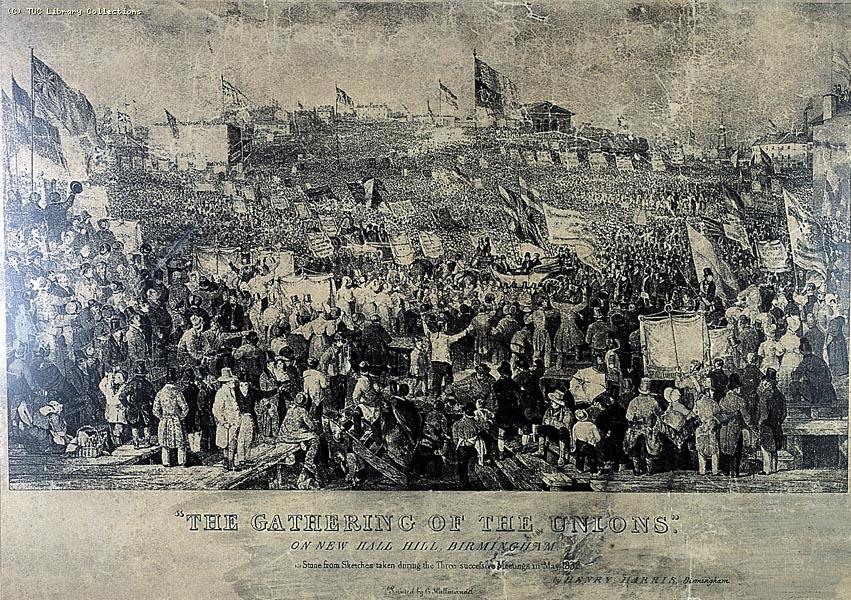
'The Gathering of the Unions', Birmingham 1832. Sorry I couldn't get a better shot. I was engraving as fast as I could, but they kept moving!

More faces of evil

J30 Special: Here are some more of the terrorists the Daily Mail warned 'parents' about (as though no parent is a public sector worker, parent of public sector workers, or descended from public sector workers). Captions are satirising the Mail of course.

That would be the newspaper which blamed us teachers for a girl's death today. That's right. 'Because' we were on strike, she sat under a tree. 'Because' we were on strike, the branch broke. 'Because' we were on strike, she died.

I wonder how the parents of this poor girl feel about the way their daughter's death has been used, and note that no reporter would actually put his or her name to this disgraceful piece:


Full set here: click these to enlarge.


Look at her evil smiling face… bet she's some kind of anarchist communist poisoning innocent children's minds

They can't even march straight

Another child lost to Satan

Ugh! Modern Art!

Celebrating the downfall of British Values!

Some of these strikers wear nice clothes! How dare they complain about their pensions!

Dreads. Brown skin. Happiness. Everything the Daily Mail fears!

He only looks innocent. Inside he's a cauldron of hatred for Middle Britain

Look at her grinning altruistic face! Burn her!

Meet the Union Bullies the Daily Mail Warned You About

This was yesterday's rather hysterical Daily Mail front page on the J30 rallies:

Now as you know, I'm a shy and retiring mammal with very little tendency towards thuggish bullying, and I suspect that the assorted teachers, lecturers, cleaners, lab techs and so on who joined me at yesterday's rally were, on the whole, not the types who would once have held your head down the toilet bowl or snapped your spectacles in the playground. 

And lo and behold, they weren't! Here are some of the pictures I took. Click on them to enlarge, or see the whole set here.


The face of evil


The unacceptable face of militant trades unionism

This man is a threat to your house prices, Mail readers!

Sarcasm… it's every teacher's WMD

Nearly a terrorist.