Monday, 4 July 2011

The government's HE plans explained by someone calmer than me

The Vice-Chancellor at Salford University isn't too impressed by the government's White Paper on HE. He explains it all here, much more lucidly than I did the other day.

Some extracts:
The White Paper on Higher Education, delayed from last November and finally published last week, is both bad and dangerous. Bad because it lacks both a credible vision for education and because it will put in place the opposite of what it espouses: a massive regulatory system. Dangerous because its proposals will further divide an already-divided society
Universities are “top” because they only admit applicants with the highest A-level grades. Because they are “top” they should be rewarded by being given unrestricted places for students with the highest A-level grades which, of course, guarantees that they remain “top”. 
“Efficiencies” is a euphemism for cuts.  Because universities typically spend between 55 per cent and 60 per cent of their income on salaries, the only way to compete on price in the market that the White Paper seeks to create is by increasing the size of classes and tutorials and by reducing face-to-face staff-student contact in other ways. Both Ministers and clever economists in BIS know only too well that education throughout the world suffers from “cost disease” – it is not possible to maintain quality while making cost efficiencies in the same way as in a manufacturing production line. “Contestability” for student places on the basis of price is a race to the bottom in quality. 
There's plenty more here.

'…gossip, envy, malice and "constructive criticism".

Well, that's what semi-pro historian and centrist MP Tristram Hunt thinks blogs are for - an opinion expressed in a newspaper column (that famously objective and calm medium) on the subject of Why The Internet Is Letting In All The Oiks And Disturbing Proper History.

Now, my field (1930s Welsh proletarian literature, amongst other things) has yet to make a huge impact on the web. The novels I study aren't on Gutenberg. The archives haven't been scanned, the letters not uploaded. Which is a shame: I've spent a massive amount of money on rare books, travel, nasty bed and breakfast establishments and railway station pasties (never, ever, be tempted by the 'beef and onion', an insult to both substances). If I had more money, I'd make more visits. However, not being professionally interested in the actual paper used or the postmarks, I'd quite like the Gwyn Thomas Correspondence to be on the web. I'd work from the scans, and lots of people might accidentally stumble upon one of the great writers of the twentieth century.

I don't see why a supposedly leftwing historian wants to reserve any academic subjects for academics. We need experts (at least, I need you to need me!), but we also need to widely disseminate everything. The existence of the Daily Mail, Paul Uppal and Simon Cowell to pick three random examples, can be directly attributed to the denial of detailed context to the masses and thus an inability to refute their hysterical assertions. Their distortions and exaggerations only thrive when a public is encouraged to remain uninformed.

So making historical texts available online isn't an attack on Tristram's unhealthy fetishistic love of actually touching the very paper a scholar used (though every touch is damaging): it's an accessory, a democratic gesture in an increasingly undemocratic world.

History, literature and every other field, shouldn't be the preserve of a smug little club telling everyone what to think. We need experts who can spend all their lives thinking deeply about a special corner: but without easy access to texts and ideas, the expert will have nobody to talk to. That may be fine for some of the more insular academics, but it leaves me cold. I'm an evangelist for ideas, and I need to believe that there's a pool of people thirsty for conversation.

Hunt has this to say:
There is nothing more thrilling than untying the frayed string, opening the envelope and leafing through a first edition in the expectation of unexpected discoveries. None of that is possible on an iPad.
He's completely wrong. Unless you have some sort of collector's obsession with being first all the time (which isn't academia, it's trainspotting), then there is something far more exciting than touching a piece of paper nobody's touched for a while.

It's having a new idea, or developing existing ones in interesting ways. Michel Foucault (re)discovered the Memoirs of Herculine Barbin - but the thrill wasn't novelty: it was the opportunity to explore the tense relationship between individual identity and the social institutions.

But I suppose Tristram hasn't yet experienced that.

Friday, 1 July 2011

Time to lay off Nick Clegg?

Instinctively, no.

But I ask the question after listening to a simply magnificent philosophy paper by my friend and fellow union activist Cecile. She asked two simple questions:
1. Do the public demand a higher morality from politicians?
2. Should they?

Her response - closely argued - was yes, and no. Yes, 'we' demand a higher standard of personal and professional judgement, and 'no', because the scope, type and consequences of politicians' decision-making is philosophically no different to other spheres. The giant supermarket's sourcing decisions can transform millions of peoples' lives for better and worse. Violence is not reserved to the state other than legally. Other people are equally in the public sphere. Impartiality is not necessarily the same as justice.

I have two points to make on this one, though I do agree with the main thrust of the paper.

1. How do we know what the public wants? I know what Polly Toynbee wants. I know all too clearly what the editors of the Daily Mail and Daily Telegraph claim that the public wants. But these publics are selective at best and imaginary at worst. Furthermore, a second's thought reveals that what a person says they want and what they really want can be a long way apart. Every poll says that we want more nurses, teachers and hospitals. Every election reveals that we don't want to pay for them. (Not me by the way. I like tax and the things it brings). We all perform a version of ourselves edited to match social expectations. OF course we say we want a moral political class - but nobody ever read Alan Clark's diaries for his account of everyday life in the MoD.

2. Secondly: my Occam's Razor approach to the question of whether we should expect a higher moral standard from our politicians is that we should because they ask us to. Every appeal from a politician to vote for them, trust them or believe in them is predicated on the promise that they are capable of behaving in a moral fashion.

We all know that this is a massive lie. But that shouldn't mean that we let them off the hook. We should expect them to make the effort, and we should hold them to account when they fail. If they make unattainable promises ('an ethical foreign policy' - for which I yearned without every expecting to happen - springs to mind, or John Major's 'back to basics'), let's use these promises as a big stick with which to beat them.

Like most people, I'm a lazy, backsliding, oafish creature. I don't want to be governed by people like me. I want to be governed by people not swayed by a neat line, not tempted by another hunk of cheese or one more pint, or a flash of a stocking. Of course, rule by saints would be oppressive and cruel (e.g. the Commonwealth), but a gesture in the right direction would be nice.

This, dear reader, is why I've spent the past year haranguing Mr. Paul Uppal, my mediocre MP. He stood for election on the basis that he thought he was the 'best person' for the job. HE raised expectations, not me. He has consistently failed in his public duty and personal qualities, behaving in a dishonest, disingenuous and selfish fashion at every turn. In a sense, I prefer the old-fashioned Tories. Alan Clark et al. never mentioned morality. They never claimed to behave morally. Thatcher never claimed to be acting in the best interests of society. They announced that they were going to impoverish the many for the benefit of their friends, and proceeded to do so. That so many people were fooled into voting for them was our fault and our downfall. There was an honesty in the Old Tories' rapacious selfishness which is far more respectable than the honeyed humbug of our smooth-tongued and no less evil New Tories.

Should we expect morality from our politicians? The difference between them and other sections of society is that they make a point of proclaiming it.

If they promise it, we should expect it.

(And if nobody aspires to a higher morality - however defined - we'll never get one).

Why I love JK Rowling

Leaving the books aside for a moment, it's this piece from 2010.

Nobody who has ever experienced the reality of poverty could say “it’s not the money, it’s the message”. When your flat has been broken into, and you cannot afford a locksmith, it is the money. When you are two pence short of a tin of baked beans, and your child is hungry, it is the money. When you find yourself contemplating shoplifting to get nappies, it is the money. If Mr Cameron’s only practical advice to women living in poverty, the sole carers of their children, is “get married, and we’ll give you £150”, he reveals himself to be completely ignorant of their true situation.
How many prospective husbands did I ever meet, when I was the single mother of a baby, unable to work, stuck inside my flat, night after night, with barely enough money for life’s necessities? Should I have proposed to the youth who broke in through my kitchen window at 3am? Half a billion pounds, to send a message — would it not be more cost-effective, more personal, to send all the lower-income married people flowers? 
Suggestions that Mr Cameron seems oblivious to how poor people actually live, think and behave seem to provoke accusations of class warfare. Let me therefore state, for the record, that I do not think it any more his fault that he spent his adolescence in the white tie and tails of Eton than that I spent the almost identical period in the ghastly brown-and-yellow stylings of Wyedean Comprehensive. I simply want to know that aspiring prime ministers have taken the trouble to educate themselves about the lives of all kinds of Britons, not only the sort that send messages with banknotes.
But wait, some will say. Given that you have long since left single parenthood for marriage and a nuclear family; given that you are now so far from a life dependent on benefits that Private Eye habitually refers to you as Rowlinginnit, why do you care? Surely, nowadays, you are a natural Tory voter?
No, I’m afraid not. The 2010 election campaign, more than any other, has underscored the continuing gulf between Tory values and my own. It is not only that the renewed marginalisation of the single, the divorced and the widowed brings back very bad memories. There has also been the revelation, after ten years of prevarication on the subject, that Lord Ashcroft, deputy chairman of the Conservatives, is non-domiciled for tax purposes.
The fact remains that the first time I ever met my recently retired accountant, he put it to me point-blank: would I organise my money around my life, or my life around my money? If the latter, it was time to relocate to Ireland, Monaco, or possibly Belize.
I chose to remain a domiciled taxpayer for a couple of reasons. The main one was that I wanted my children to grow up where I grew up, to have proper roots in a culture as old and magnificent as Britain’s; to be citizens, with everything that implies, of a real country, not free-floating ex-pats, living in the limbo of some tax haven and associating only with the children of similarly greedy tax exiles.
A second reason, however, was that I am indebted to the British welfare state; the very one that Mr Cameron would like to replace with charity handouts. When my life hit rock bottom, that safety net, threadbare though it had become under John Major’s Government, was there to break the fall. I cannot help feeling, therefore, that it would have been contemptible to scarper for the West Indies at the first sniff of a seven-figure royalty cheque. This, if you like, is my notion of patriotism. On the available evidence, I suspect that it is Lord Ashcroft’s idea of being a mug.
Child poverty remains a shameful problem in this country, but it will never be solved by throwing millions of pounds of tax breaks at couples who have no children at all. David Cameron tells us that the Conservatives have changed, that they are no longer the “nasty party”, that he wants the UK to be “one of the most family-friendly nations in Europe”, but I, for one, am not buying it. He has repackaged a policy that made desperate lives worse when his party was last in power, and is trying to sell it as something new. I’ve never voted Tory before ... and they keep on reminding me why. 

It's Forward to the 19th Century With Paul Uppal MP

Alongside his attempts to abolish trades unions and further enrich the rentier class, our industrious MP (ho ho) has managed to find his constituency and attend an event:
At Wolverhampton Girls’ High School centenary celebration – congratulations to them for all the tremendous achievements over this time

Magnificent. The only institution in the city he's positive about is a selective, single-sex school. Academically, it's very good - but let's not forget that selective education (i.e. entrance according to how much money your parents have spent on extra coaching and bourgeois socialisation) abandons the other 99.9% of the city's students as undeserving of small classes, top teachers, great resources… it's an educational two fingers to the rest of us for being poor and unpushy.

What else is Uppal up to? Well, he's trying to further impoverish local government:
Spoke in House of Commons yesterday to call for a debate on free car parking in towns and cities to boost trade
Not a simple gesture for shoppers, but part of an ongoing strategy to enrich commercial property owners (by a MASSIVE coincidence, Uppal is a millionaire commercial property developer) and strip local government of resources. Answer me this though Uppal: how will free parking help when the city has the highest proportion of vacant shops in the country? And what about the environmental considerations. We've got buses, trams and trains - surely that's enough?

It's not all rioting and committees

One of the best day's in my institution's year is the annual Staff Research Conference held by what other universities would call the School of Humanities. But I won't get into that argument, as I'm having such a good day.

Presenters are from all over the academic shop: lawyers, economic/consumption historians, linguists in several languages, sociology, literature and all points in-between. I've presented in previous years and will again: this year I'm content to settle back and be enlightened.

So far, I've attended papers on journalists' understanding of what kind of images are or aren't too horrific for display on TV and their relations with editors; an aesthetic analysis of Colombian film The Wind Journeys; an exploration of the different understanding of psycholinguistics in Russian and British academia; a very interesting piece on the linguistic modes of online forum disagreements ('You suck'), presentations on colour in 18th-century English retail, on the material lives of singletons in the 18th-century (e.g. how spinsters, widows, almshouse inhabitants and others lived), and a fascinating exploration of changing shopping practice in the postwar Black Country: the complex interactions of the corner shop, credit, social standing, communal relations and the rise of the supermarket.

Now I'm in the Literature session. The current speaker is talking about the English Romantics' reception and use of Bernardin de Saint-Pierre's Paul et Virginie, as translated by Helen Maria Williams the radical poet, novelist, revolutionary and translator. I'm ashamed to say that I haven't read the novel in either language, though I'm familiar with many of the Romantic texts the speaker asserts were influenced by the novel. Next up is my friend Lorna on Ellen Williams's fascinating, gender-transgressive New Woman/Journalism novel, Anna Marsden's Experiment (annoyingly not on Project Gutenberg or available in any bookshop anywhere, damn it). One of its interesting features is the newspaper our hero/ine works at: the Daily Planet!


After that, Gaby on one of my very favourite authors, Mervyn Peake, which should be a real treat.

Don't worry: I'll get back to whinging about the government shortly. In the meantime, have a look at this - my friend Ben's short, pungent and witty 10 Point Plan To Save The Country. He's a much better writer than I am.

Subversives, terrorists and other threats to the British Way of Life

In honour of yesterday's Daily Mail front page ('Resist the Union Bullies'), some more examples of those bullies in action at J30, with Mail-appropriate satirical captions). The whole set is here and there are more highlights in the previous 2 posts (go here and scroll down). Click on these to be confronted with the 'enemy within' on a gigantic scale!

Indoctrinated. She'll never fear the working classes now!

Look at her, sitting down rather than working for the minimum wage and a poverty-stricken retirement. 

That's right. Michael Foot has been reincarnated and he's coming for your children

Of course they're delinquents. They're under 65, which is the only qualification Daily Mail readers recognise.

Brown people expressing opinions: every Mail reader's nightmare

Lost to the tennis club and Young Conservatives. A life of drugs and abortions awaits these two.

Bono's really let himself go

Even the middle classes can be poisoned by the Doctrine of Hate peddled by subversive primary school teachers and lefty lecturers. 


Behind that cute expression, she's already planning violent revolution

And what's worse, his sticker was in English until some English people walked in!
(It's Welsh for 'Fair pensions for all')


Another of the usual anarchist suspects to be found at every demonstration


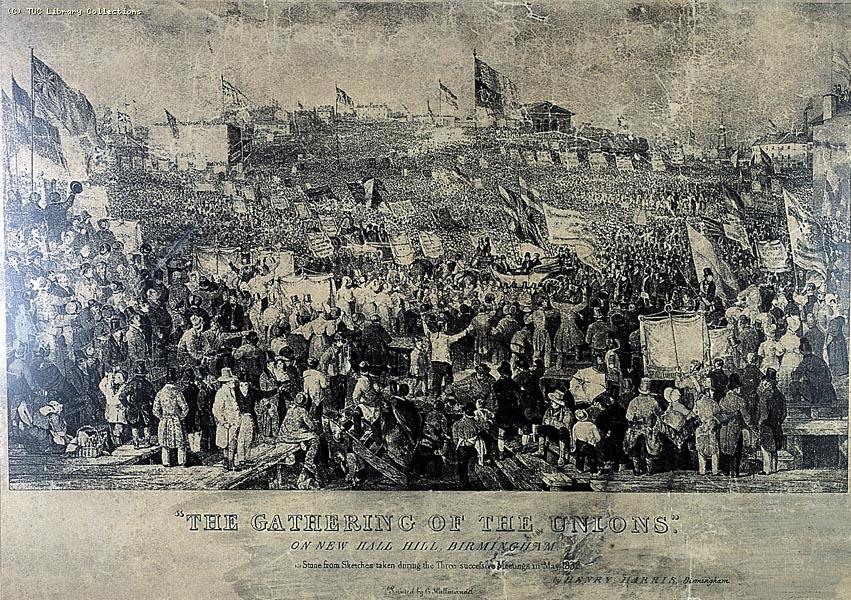
'The Gathering of the Unions', Birmingham 1832. Sorry I couldn't get a better shot. I was engraving as fast as I could, but they kept moving!

More faces of evil

J30 Special: Here are some more of the terrorists the Daily Mail warned 'parents' about (as though no parent is a public sector worker, parent of public sector workers, or descended from public sector workers). Captions are satirising the Mail of course.

That would be the newspaper which blamed us teachers for a girl's death today. That's right. 'Because' we were on strike, she sat under a tree. 'Because' we were on strike, the branch broke. 'Because' we were on strike, she died.

I wonder how the parents of this poor girl feel about the way their daughter's death has been used, and note that no reporter would actually put his or her name to this disgraceful piece:


Full set here: click these to enlarge.


Look at her evil smiling face… bet she's some kind of anarchist communist poisoning innocent children's minds

They can't even march straight

Another child lost to Satan

Ugh! Modern Art!

Celebrating the downfall of British Values!

Some of these strikers wear nice clothes! How dare they complain about their pensions!

Dreads. Brown skin. Happiness. Everything the Daily Mail fears!

He only looks innocent. Inside he's a cauldron of hatred for Middle Britain

Look at her grinning altruistic face! Burn her!

Meet the Union Bullies the Daily Mail Warned You About

This was yesterday's rather hysterical Daily Mail front page on the J30 rallies:

Now as you know, I'm a shy and retiring mammal with very little tendency towards thuggish bullying, and I suspect that the assorted teachers, lecturers, cleaners, lab techs and so on who joined me at yesterday's rally were, on the whole, not the types who would once have held your head down the toilet bowl or snapped your spectacles in the playground. 

And lo and behold, they weren't! Here are some of the pictures I took. Click on them to enlarge, or see the whole set here.


The face of evil


The unacceptable face of militant trades unionism

This man is a threat to your house prices, Mail readers!

Sarcasm… it's every teacher's WMD

Nearly a terrorist.

Wednesday, 29 June 2011

What every radical subversive academic will be wearing tomorrow

I've just nipped out to do some shopping. As a fully paid-up member of what Margaret Thatcher called 'the enemy within', I came back loaded down with weaponry ready for tomorrow's strike.

Actually, I bought two new pillows and a breadbin. And this, 'designed' by me, which I'll be sporting on the picket lines and at the big rally in Birmingham tomorrow. Victoria Square, 12 noon. I couldn't think of anything catchier than 'millionaires mugged me for my pension', and didn't have time to get pictures of Clegg, Cameron, Gove, Willetts et al. Still, it will do, and I rather suspect I'll get to wear it rather too often.


I won't be blogging tomorrow, but I'll be taking a lot of pictures which I'll try to post on Friday, during out Staff Conference. Meanwhile, remember the old slogan: Educate, Agitate, Organise!

A temporary return to justice

After a shameful decision to exclude Ireland's cricket team (y'know, the one that beat England) and the other Associate nations from the World Cup, the ICC has accepted demands that 14 teams qualify, rather than 10, as they'd planned.

I listened to Ireland's triumph over England on the radio while at work, to the bemusement of my office colleagues. Just after it finished, I took a call from a local aspiring politician, anxious for my support in his quest to become a Labour council candidate.

Him: Listening to the cricket? I used to be a professional cricketer. Terrible about England losing.
Me: Actually, I support Ireland.
Him: Brilliant, isn't it? Great result.
Me: ???!

No doubt he'll go far, but without my support. Though you have to admire his chutzpah.

The Education White Paper Through The Medium Of Tory Cartooning

We're off on strike tomorrow in defence of our 'gold-plated' pensions, alongside such subversives as the ATL (first strike in 127 years) and their Eton College members.

I didn't get a full-time job until I was 32, thanks to the system of extra qualifications and university understaffing. I'm now 35 and still don't have a permanent post, so can't raise a mortgage etc. So my pension contributions won't furnish me with a gold-plated hearing aid, let alone a heli-pad.


I was looking for a cartoon by Matt of the Daily Telegraph (I have very reactionary parents) from the 1990s to illustrate the ways in which universities will now have to recruit. In it, two men walk past a doorway festooned with flashing lights and signs reading 'Girls Girls Girls' and 'Free Drinks'. One says to the other 'Careful: it could be a university'. If you've got it, PLEASE scan this in for me - it's not on the web anywhere.

Like America, there'll be sectors. Some will target the Swot Pound: oak panelling, libraries full of leather-bound books, cloisters. We'll call this Hermione Granger University. Others will market themselves on the en-suite jacuzzis in the accommodation and the hotness of the undergraduates. Giggs College. Yet more will advertise the lifestyle available in the bustling metropolis (in my institution's case, 'All The Grey Peas You Can Eat'. Our former use of a football stadium for teaching might yet be a selling point.

But there's a serious point. Ritzer's 'The McDonaldisation of the University' posited an HE sector in which everything becomes easier and more casual (our essay submission office is named - without irony - 'Here2Help'). No student will ever be made to feel like they've not worked hard enough. The glitz and luxury will take centre stage. Glossy brochures and peripheral attractions will replace the serious business of educating yourself.  Education is to become a consumer experience like a gap year with a few books sneaked in - not a process in which the adventure and the adversity is that of the intellect learning to make sense (or often not making sense) of oneself and the world.

This theme-park education will inevitably lead to exclusion. The poor and the black will come to places like mine to do business-friendly qualifications which gain them entry into the exciting world of data-entry and call centres. To these students, we won't be native guides in the forest of learning: we'll be the surly checkout assistants who impede their progress.


The mavericks will go to a small number of high-powered élite institutions before living meaningful lives in Silicon Valley or CERN. And the dim, over-privileged children of the Permanent Ruling Classes will carry on doing Fine Art in cloistered, honey-walled universities with a fleet of servants and punts for their leisured hours, secure in the knowledge that the House of Commons, Sothebys and the investment banks will welcome them with open arms.

Delightful, no?

In defence of English

One of the side effects of the Arab Spring is a move towards academic freedom (ironically, while the government here is subjugating us to the brutish whims of the market).

In Cairo, the academics have elected their Deans for the very first time, and a woman won the race for Dean of Arts. And then a state-owned newspaper weighed in with a belated complaint about a short story on the English curriculum, one with a lesbian scene - and the twin joys of academic self-rule and democracy are suddenly in doubt.

As an aside, I suggested to our Vice-Chancellor that an academic senate would do a fine job, rather than the politburo of apparatchiks on a minimum of £100,000, given our recent history of redundancies and fines. The suggestion went down like the proverbial bucket of cold sick.

But on the main point, I really shouldn't have to reiterate the values of a humanist education. I really don't know whether the short story with a lesbian scene is any good or not: but I'd rather trust an academic than a politician or a hack.

I've had frequent brushes with censoriousness. Friends of mine have been dragged through the tabloids for taking an academic interest in sexual texts, as though talking about what a society generates, watches or bans is the equivalent of actually attaching the student to the pig's genitals. It gets the complainant a few headlines of synthetic outrage in the less reflective newspapers, but over the long term, simply closes off more avenues of human enquiry. What Egypt needs now is a cohort of students who don't recognise taboos: they've had generations of rulers telling them what not to think about: women's rights, democracy, religion, human rights, freedom, sex. Now it's their turn to examine the pressing issues of the day.

I recently attended a seminar on the notion of 'teaching offence', and was surprised to learn that most other universities avoid teaching anything controversial. Bezhti, the play which annoyed some Sikhs was mentioned: the theatre cancelled the performances and one academic nervously cited it as the kind of thing to be avoided. Sorry - we've done that one already. We have to assume that students are ready to examine their personal limits, safe in the knowledge that we're not gratuitously provoking them. I've taught Beauty to a first year class recently - a book I consider borderline racist. Half the Asian students hated it, the other half thought it authentically echoed their own experiences.

I've also shown the Laurence Olivier Othello: hammy blackface and all. I got complaints and learned from it. I'd show it again too - as a demonstration of the fact that cultural values change. Olivier and crew clearly never considered a black audience was possible, and that white audiences would be perfectly happy with the kind of crude stereotyping presented in that production.

Morel closely linked to the Cairo situation, I've taught an entire class on historical interpretations of Sappho's poetry, covering the construction of Sappho as a lesbian (as Butler et al. demonstrate, it's more complicated than you'd think), the censorship implicit in various translations, and the titillation adopted by others. We did this in an all-female first-year class, with my PGCE mentor taking notes. I expected some complaints based on the material, and on the situation in which a male heterosexuality lecturer talks to female students about female sexuality. The complaints didn't come: instead, the students launched into a confident and sophisticated discussion.

If you feel that Egyptian students should have the right to read, then accept or reject texts for themselves, write to:
Professor Dr. Hossam Kamel, President of Cairo University
El Gamaa Street
Cairo
Egypt

Tuesday, 28 June 2011

More Tory hypocrisy - and close to home

Another fine moment for Paul Uppal MP.

He voted for a motion to ban strikes in the emergency and transport sectors unless a majority of those eligible to vote cast a ballot in favour (i.e. 50%+1). Now I could go on about the massive weight of biased Tory-inspired laws (retained by Tony Blair because he's a Tory wanker) which work to prevent this happening, but instead I'll remind you of Paul Uppal's electoral record and position on AV, the electoral system which proposed that MPs have to get 50%+1 just of those who bother voting, to be elected.

Did Paul support a system which would have required him to persuade 50% of those voting (not the electorate, unlike the law he tried to apply to strikes)? He did not.

Did he get voted in by 50%+1 of the electorate?
He did not.


Paul Uppal, Conservative16,34440.7%
Rob Marris, Labour15,65339.0%
Robin Lawrence, Liberal Democrat6,43016.0%
Amanda Mobberley, UK Independence Party1,4873.7%
Raymond Barry, Equal Parenting Alliance2460.6%
CandidateVotesShare %Conservative majority:

691


Conservative majority: 691.
Turnout: 67.9%.
So Uppal is MP thanks to 40.7% of the 67.9% who bothered voting.
So of the 60,000 or so eligible voters (and don't forget that Uppal counted non-voting trades union members in his spiteful little motion), he was 'elected' by 16,344 of them: that looks like 27% to me.
So by his own logic, he's illegitimate. Time to resign on principle.

Competition Time

I have inadvertently purchased two copies of Linden Peach's excellent The Fiction of Emyr Humphreys: Contemporary Critical Perspectives (University of Wales Press, 2011), at a cost of £20 a go. I can't express how brilliant Humphreys' work is: he and Kate Roberts deserve Nobel Prizes. Try Humphrey's A Toy Epic, Outside the House of Baal or Old People Are A Problem for starters amongst his English-language work.

One copy will be awarded to whoever completes this sentence most amusingly:

My favourite thing about Michael Gove is… 

My decision is final, employees of Michael Gove are welcome to enter the competition.

I don't think I have ever been so angry

Sorry for a long and boring post, but I am an academic (ahem) and it's a big day.

The government today launched its plan for universities. You might be thinking that a master-strategy should come before making universities charge massively higher fees and change everything they do at the whim of a barely-elected bunch of chancers, but that's because you're not a highly intelligent politician.

So, my quick guide to their 'ideas'.

1. David Willetts: 'We believe in the power of students'. 
Unless they disagree with me, in which case they're spoiled and stupid. Underlying the government's case is the idea that every student is a rational consumer with all the information required about the future job market at their fingertips, and with no constraints on their choices. In the real world, it's impossible to work out what will happen in 4 years' time - I imagine there are quite a lot of depressed graduates with Banking and Finance degrees around at the moment. Also, a lot of my students don't lead stable lives leading to selfish-rational choices. They choose an institution based on being able to keep their jobs, to live with their families, in cities they can afford, near to their kids' schools and a host of other factors come into play.

There's a reason why medicines aren't advertised (unlike America): it's because there's no earthly way that a patient can be informed enough to make a judgement between one brand and another. We trust our doctors about this. Now imagine sitting down an 18 year-old (perhaps one like this) and telling her that she has to make major decisions about her life right now, as a customer. It's not fair on either her or the institutions.

2. The 'reforms' will save the government money. 
No they won't. Or rather, they'll appear to on paper. The government will loan students £9000 per year plus their student maintenance grant, rather than giving some money directly to universities (hence the guff about the 'power' of students) and £1000 or so to the students to give to the university. But students won't pay anything back for several years, and most won't pay all of it back. So how do they hide the massive loss to the taxpayer? By taking it off the books: because it's theoretically meant to be paid back, it won't count as yearly expenditure.

3. Universities will compete on price, but quality will improve.
Eh? Do supermarkets get better at the bottom end? Is Aldi bread better than Waitrose? Much more importantly, how is any institution meant to get any better when it's forced to compete on price? Cutting libraries, reducing staff, enlarging classes, reducing academic work: these are how costs will be cut. So the very rich institutions (Oxford and Cambridge own massive amounts of land, art, property and attract huge donations) will continue to hire Nobel winners, build libraries and labs, while the rest of us cater for the state-educated masses in knackered buildings, huddled round the Departmental Book or Bunsen burner.

Opening the sector to fly-by-night Discount Degree providers is a dodge to take pressure off the Treasury, not an aid to students. Quality education costs a lot of money. This is the 5th largest economy in the world. I pay tax so that my binman's kids can be educated. Suck it up.

4. Private providers will improve quality.
Really? Where will they get their staff? Either they'll have to pay huge rates to people they poach from proper universities, or they'll try the usual tricks: underqualified, ununionised staff desperate for any job. They'll cater for the cheap degrees, rather than the rather expensive requirements of the sciences, for example. This is simply an extension of Ritzer's McDonaldisation process. You can be damn sure that not a single Cabinet Minister's child will be attending Blackburn College of FE, or BeJam University College, whatever the grades required.

Private providers have shareholders, and shareholders want profit (this is why I'm opposed to capitalism: profit is waste, money that should be distributed to the workers or reinvested in the company). Where will the profit come from, if the government's insisting that these places can deliver education at £6000 per year? Easy: you employ classroom assistants to turn on the DVD player to deliver pre-recorded material. That's not education: it's indoctrination. Those of my students who write down what I say and repeat it in essays are uneducated. Education consists of understanding lectures as a partial starting point, going to the library to read around the ideas, then working out what you think about the various perspectives available, often through the medium of heated debate in class.

With these private providers, your lecturers (should there be any) won't be qualified to offer an opinion. There won't be a debate because seminars are expensive: there won't be any, or there'll be 100 of you in each class. There won't be a library of critical work: you'll be expected to Google quotes to stick in the essays to be marked by unqualified drones.

5. Universities will be business-friendly and therefore provide graduates equipped for the demands of employment.
Employers will 'kitemark' degrees they respect. So you can presume that the Association of British Bankers won't be kitemarking degrees which blame bankers for the er, banking crash. The CBI won't be authorising modules which praise Fairtrade, trades unions, or the minimum wage.

Most of your government have humanities degrees, yet they're keen to deny that to you. Futhermore, businesses which demand slaves indoctrinated by the current orthodoxy tend to go spectacularly bust. Look at Alan Sugar's pisspoor products, or the banks: key business schools failed to offer any critique of their economic models, and should bear a large burden of the guilt. Universities shouldn't be sausage machines, turning out obedient drones: they should be generating innovative troublemakers - that's how you get progress.

Not all education should be about improving capitalism. It's worth knowing, y'know, stuff about Anglo-Saxon literature, or shingle beaches (a friend of mine was the world's only expert on shingle beaches). It doesn't make Branson any money, but surely there's room for things which don't profit Branson and friends.

6. Private providers will improve quality.
Not if they're cutting corners, they won't (and the Higher Education Funding Council for England says so). And the NSS suggests that students are happy with the quality of provision (except at the Hegemon, where moronic restructuring by a management cult has led to deep unhappiness).

Allowing dodgy companies to award degrees will just ruin the good reputation UK universities have. Look at BPP: their US parent group has paid millions in fines for deception. Its university (Phoenix) has a pass rate of 9%. It's a machine for channelling US taxpayers' money into shareholders pockets. Profit-making 'universities' in the US take 25% of the state loans but only teach 10% of the students: of which 90% don't achieve their qualification.

The same will happen here when Murdoch University opens. The government is reserving 20,000 places for cut-price colleges: that's playing with people's lives. It's not the private sector coming to the rescue of the public sector: it's the  taxpayer being forced to hand over money to the private sector (just like the banking bailout) with the students as collateral damage. (It's also a fix: for a bunch of supposed free-marketeers, why stop those 20,000 going to the college they choose?)

The government says that students will have rights to demand quality reviews and better teaching. It doesn't square with discount degree mills: quality means qualified people communicating well, students being pushed academically, and high-quality resources. All this costs money.

7. Removing high-achieving students from the quota will be good for universities.
At the moment, there's a limit on the number of students universities can recruit - to keep down costs. The government plans to tell universities that students with AAB and higher can be recruited without regard for the cap. What will that do? Well, the top 5 will soak up every single student with high grades. Will that be good for the students? Not if there's a really good course at an unfashionable or less-privileged institution. The student will be bribed by the élite, then find that the baubles disguise bigger classes and less contact time.

Who are these students? They're largely from fee-paying schools, coached to pass exams. When it comes to university, state school children actually do better in the final degree classifications. But if access to the elite institutions is limited to those with top A-levels, then only those kids will get the best resources, and only those kids will go on to do postgraduate degrees, further entrenching this country's disgusting class stratification.

What about the large number who don't have A-levels. Many now do quite good alternative qualifications. Others have returned to education later in life, never having had the chance to take A-levels. This government doesn't give a shit about them, but I'll tell you this: 'unqualified' mature students are absolutely fantastic in class. This is true too: Access courses are brilliant preparations for university, often giving people university skills which A-levels don't come close to.

While I'm on the subject of postgrads: how many will do MAs, PGCEs and PhDs if they're already £50,000 in debt? Just the rich, that's who. So the next generation of doctors, lawyers, academics etc - the professions - will only come from the ranks of the rich. That's bad for any society. God knows who'll become a social worker or a teacher.

8. Students should shop around on price. 
Every teenager knows that there's a difference between Primark and Savile Row. They're not so stupid that they think there's a bargain to be had. It will generate a race to the bottom, and students will find out as soon as they sign up at Cutprice College. They know that education is more than a product to be bought: it's a public good too. Each degree is special, as the 1994 group of universities knows:

High quality student experiences are not confined to a small group of institutions that are perceived to be the elite.  The Government also needs to avoid driving down standards by auctioning students to low cost institutions. Student places must be awarded where there is clear evidence of good value. We should not encourage higher education providers to short change students by cutting corners.

I work at a very unfashionable university, but before it suffered a run of malevolent incompetent management visionaries, it was amongst the very best institutions in the country for languages. Students need to know this kind of thing, rather than be encouraged to look only at the price tag.

9. Non-teaching universities should be able to award degrees.
I've got four degrees. I think a lot. I literally cannot understand what the point of this is at all.

Other highlights: rich students will be able to pay off their loans early, avoiding the interest, and therefore get a head start on everyone else. Private companies are to be allowed to sponsor students outside the quota cap - so banks and other unpleasant institutes can clog up the classrooms with extra bodies at the expense of students without sugar daddies.

The whole thing is a desperate set of ideological wet dreams hitched to a guilty realisation that they've massively arsed up their sums. If this doesn't reignite the Days of Rage, nothing will.

Still, we've found room to give Prince Charles a payrise funded by taxpayers, so it can't all be bad. Those closed charities, libraries, derelict schools and so forth must be chuffed for him.

I'm so angry that I can't type any more. I'm going to lie down somewhere dark and sob uncontrollably.

Goveduck

My friend Neal decided (rightly), that the Education minister, Michael Gove, has the face of a flounder. Steve Bell's decided that he's a duck. This is the Gove who's planning to take far more from my salary to pay for a much lower (and worse) pension to be paid out years later - without applying the same logic to members of parliament, to pick a random example. 


By the way, Gove has called on parents to scab by running classes on the strike day. Well, good luck to the schools in getting all the Enhanced Criminal Records checks done - as legally required - by Thursday: mine took a few weeks. If they can't show them, don't send your kids to school.


Oh, and for Nick de Bois MP, who suggested that the strike votes are illegitimate because fewer than 50% of the members voted in favour, let's look at his electoral history:
  • he campaigned against the Alternative Vote, which ensures that MPs have to gain 50%+1 vote to get elected: 'unfair, expensive, discredited and unpopular…a disaster for our much admired democratic system'.
  • he was elected with 42.3% of the vote: not even a majority of those who bothered to vote. With a 67.1% turnout, he managed to become the voice of Enfield North on the back of 18,804 votes out of 66,347 eligible voters, which looks like an underwhelming 30% to me. Clearly de Bois should resign forthwith, according to his own logic.
de Bois also claimed that other professions like doctors and lawyers weren't taking industrial action. Oh yeah? The lawyers are furious at attempts to slash Legal Aid, and the doctors' leader said this yesterday:
Let me make it absolutely clear: we will consider every possible, every legitimate action that can be taken to defend doctors' pensions," he said in a speech to 500 doctors' representatives in Cardiff.
"I have this message for ministers. Whilst we will be reasonable, whilst we will not rush to precipitate action, whilst we will not put patients' lives at risk, do not in any way or for one single moment mistake this responsible attitude as a reason to underestimate our strength of feeling and our determination to seek fairness for those we represent.
"The profession will act responsibly, but we will not accept an unwarranted and unfair assault on our pensions." Meldrum's remarks, which were greeted with loud applause, underline the strength of feeling among doctors over changes which he said should not be "just a poorly concealed tax on public sector workers".
He also criticised Danny Alexander, the chief secretary to the Treasury, for, he said, making the job of negotiating a settlement "impossible, if all we hear are public ultimatums and ridiculous threats such as those we heard just a few days ago".