Showing posts with label Wolverhampton. Show all posts

Tuesday, 14 January 2014

Capitol Capers in the Silly Season

Actor Brian Cox is in the news: he called for Parliament to be sited in a provincial city, such as Wolverhampton. A staunch Labour supporter on the soft left of the party, he makes the reasonable point that the costs of London and its associated lifestyle led inevitably to the expenses scandal. 

This of course got all the local papers going, as well as the region's politicians, never averse to a bit of free publicity earned by spouting some patriotic cant:
Mr McFadden, Labour MP for Wolverhampton South East, said: “I think it’s a great idea. We have plenty of areas in need of regeneration and I am sure all the MPs would get a warm welcome.” 
Wolverhampton North East MP Miss Reynolds added: “If there was a serious proposal on the table to move Parliament outside of London, I can think of no better place than Wolverhampton.
Nauseating enough, but not nearly as bad as (of course) multimillionaire property speculator and MP by 619 votes Mr Paul Uppal:
I think the idea of Parliament moving to Wolverhampton would be very welcome. It would make the whole place less London-centric and introduce more Black Country traditional values. I’ve always tried to bring Wolverhampton common sense into Westminster, if that could be reversed too by Westminster coming into Wolverhampton I think everyone would benefit.”
McFadden's point is simply economic, while Emma Reynolds avoids any substance at all. Both efforts are less appalling than Uppal's lazy attempt to ingratiate himself with the locals. What are 'Black Country traditional values' and 'Wolverhampton common sense'? A strong case could be made for them being old-line socialism. There's also a streak of racial prejudice: Paul's predecessor was Enoch Powell. They're just empty phrases, the usual cant of the professional politician. It's a bit cheeky of Uppal to appropriate the city's supposed values: he doesn't even live in his own constituency and can't vote for himself. Could he point to a single example of 'Wolverhampton common sense'? His voting record is of 100% loyalty to the party line. He voted to cut benefits for disabled children, to abolish the Educational Maintenance Allowance, to privatise the postal service and to triple student tuition fees.

In this company, Brian Cox looks like an intellectual giant. Whether he knows it or not, he's echoing the sentiments of the Syndicalist movement of the 1910-20s. Particularly strong in the South Wales coalfields, the Syndicalists believed that their political and union representatives were bound to lose touch with the rank-and-file: once dressed up in sharp suits and drinking sherry with the enemy in negotiations, they'd become part of a political class. Here's what the 1912 manifesto The Miners' Next Step has to say
‘All leaders become corrupt, in spite of their own good intentions…They… become “gentlemen”, they become MPs and have considerable social prestige because of this power.’ 

The leadership then starts to see the rank-and-file as a mass to be controlled for his/her own prestige, rather than as a set of independent thinkers. The syndicalists' solution was to dissolve the state and employers in favour of workers' control of their own industries, negotiating directly with the workers controlling other sectors of the economy.

Cox is nearly there. He sees London as the Great Maw, sucking in innocent politicians and turning them into self-interested cogs in a self-perpetuating machine. This isn't necessarily a leftwing or progressive position of course: plenty of rural Tories – especially those calling themselves the Turnip Taliban – see the city as a site of moral degradation. This is a long-running cultural theme too, hence the juxtapositions of bucolic idyll and urban corruption in Shakespeare and a host of poets' work.

As usual, I'm way ahead of Cox, McFadden, Reynolds et al.. When the Supreme Court was founded in 2005 by separating its functions from the House of Lords, I saw an opportunity. I wrote to my New Labour MP observing that it had no need to be in London. Justice – being an abstract concept – could be served anywhere, and locating the court away from the symbolic and actual centres of power in London would be a good way to communicate the separation of powers (even though Blair's cancellation of investigations into BAe/Saudi arms corruption proves that there is no actual separation of powers). Furthermore, perhaps judges and lawyers conducting their affairs away from the cosy confines of central London, gentlemen's clubs and Establishment haunts might inform their perception of life as it's lived by the rest of us.

JB Priestley said something similar in English Journey. Visiting West Bromwich (which makes Wolverhampton look like Manhattan's Upper West Side), he wrote about the degrading squalor of one street he called Rusty Lane. Despairing of the division between rulers and ruled, he says this:
There ought to be no more of those lunches and dinners, at which political and financial gentlemen congratulate one another, until something is done about Rusty Lane, West Bromwich.
The truth is, of course, that the political classes, particularly those on the Conservative side, either never see such places or blame the inhabitants. As Boris Johnson recently said, wealth is the natural product of genetic superiority: poverty must therefore be the inevitable result of congenital inferiority.  There's no solution to that.

Finally, the establishment of a major state institution in a poor city like Wolverhampton or Stoke would be good for the local economy.  It wouldn't just be judges appearing from the train station: lawyers, administrators, civil servants would all settle locally. I pointed out the Irish government's decentralisation strategy (now sadly ended) and suggested that the UK should try the same thing.

Rob Marris replied to me with good humour. Nice try, he basically said, but no chance. He didn't go into any detail, but we all know that the UK's political class considers that it deserves certain associated rewards: Gothic architecture, agreeable accommodation, high security and little contact with the conditions the rest of endure unless under strictly controlled circumstances.

I would support moving Parliament to Wolverhampton, Stoke or any other deprived area. I would fund MPs at exactly the same level our poorest citizens are expected to survive. They could lodge in private rented accommodation and have to prove that they were working hard enough to claim these perks. They should not only see but experience the lives of the hardest-pressed citizens. I would make our representatives much more insecure and end their culture of entitlement. Proportional representation would end the blight of safe seats and key marginals. Second jobs and directorships would be banned and our political representatives would be encouraged to rediscover the privilege of serving the citizens, not 'leading' us like cattle.

But let's not kid ourselves. Britain's political class is a centralist as France's. They're too habituated to moving in a closed physical and social circle. This is just a silly-season story out of season, an opportunity for local big-wigs to get on their high horses and into their local rags. It's a bit of a laugh then our lords and masters will retreat behind their blast walls and smoked glass and we'll forget there was ever another political possibility.

Friday, 1 November 2013

The Prime Minister and me…

One of my Romanian friends told me this story. In the last years of the Ceaucescu regime, bolder Romanians started erecting satellite dishes to pick up Western TV. As the dishes proliferated on tower blocks around Bucharest, the ageing dictator asked his henchmen what they were. 'Solar power collectors', they said, 'another way in which Romania is leading the world'.  He nodded wisely and carried on, deluded to the end about the country he destroyed.

I was reminded of this yesterday as I wandered home after a morning on the picket line. We did quite well, I think, persuading some people not to go in, talking to students and strikebreaking staff politely and calmly (one woman explained that she wasn't striking because 'my salary's excellent': solidarity, baby!). After we finished, we heard that the Prime Minister was visiting the city, and would be arriving at the railway station, so we headed up there, pleased that we'd have a chance to put our case about the country's educational degradation to the most important person we'd ever meet.

When we got there, a lot of shifty looking trained killers were wandering around, moving powerful cars and generally being important.


Is that a gun in your pocket, or are you just pleased to see me?

Police officers and Tories are apparently exempt from seatbelt and mobile phone laws 


We chatted to the uniformed police - who were pretty relaxed and friendly – and to the special branch cops, who weren't: when a colleague asked when Cameron was arriving, he was threatened with arrest for trespass!

There were about fifteen of us, neatly dressed academics looking forward to an exchange with the PM. Sadly, it wasn't to be. Rather than walking through the main entrance to the car,  he sneaked out through the cafĂ©'s kitchen, spending less than 3 seconds in the open air. I didn't even see him: the cars then roared away, running over my foot in the process. 


It felt like a Ceacescu moment. Here he was, not really visiting the city and its people at all. Instead, he moves from staged event to staged event, reminiscent of the Potemkin villages built for Catherine the Great to hide the Russian famine. In this case, he was visiting construction firm, Tory donors and notorious tax-avoiders Carillion to praise their apprenticeship scheme: I'd rather they just paid their taxes personally. But Cameron's agenda is clear: avoid the actual condition of this city (mass youth unemployment, one-third of the shops empty) in favour of a shiny happy event, just like Ceacescu and his solar collectors.

The gracelessness with which Cameron avoided the electorate in favour of publicity stunts with his mates is I suppose normal politics, but it was thought-provoking. Is he scared of us? Or is it a modern version of Queen Victoria, who pulled down the blinds of her railway carriage when travelling through the Black Country? Cameron's got blacked out windows and a Range Rover, but the contempt feels rather similar. 


Off he goes, at high speed 


This is the closest we got to a conversation with the prime minister

Monday, 11 February 2013

Beauty in the muck

Despite the ugliness on display in my local paper (today's splash: the Osmonds eat MacDonald's!) and manifested on here at the end of last week, this place can be rather lovely, especially in the snow. I took a stroll at lunchtime, determined to capture some of the city's elusive beauty. The snow was thawing fast, but I got some decent shots and played with my new Tokina 11-16 landscape lens for the first time.

Whole set here (if you know what the various ducks and geese are, help me out). Or click on these ones to enlarge.


Saxon or Roman cross outside St Peter's


Thursday, 24 January 2013

From the office window

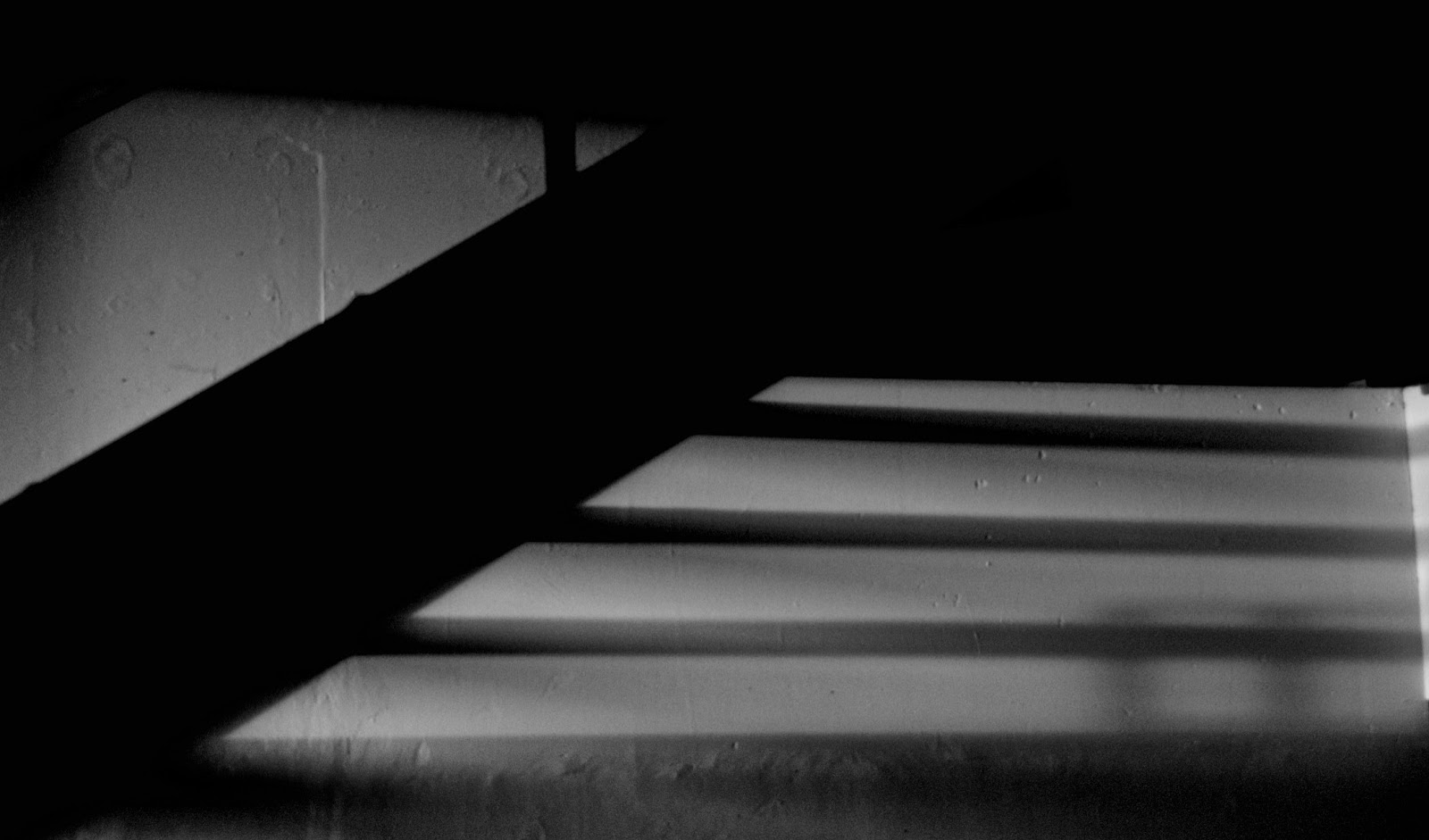
Good sunset tonight, and some pleasing light patterns on the emergency stairwell that I definitely don't use ever. The rest are at the end of this set. Click to enlarge.


Thursday, 19 July 2012

A property-owning democracy

Another day, another speculative and shoddy plan to 'regenerate' this benighted town. More shops, more hotels, more architectural excrescences - and a market that's going to be 'transformed' by the presence of a massive Sainsbury's. Just like mountains are 'transformed' by mountain-top removal mining (it really exists, sadly).

Where did this plan come from?
this vision has been shaped with the direct input of developers, agents, landowners and major businesses.”
Ah, I see. Or rather I don't see one particular category listed here: us. The citizens of the city. The movers and shakers - and Uppal's fingerprints are all over this one - haven't noticed that we live in the era of Occupy and Open Source democracy. They'll no doubt demand the same things they always do: no planning restrictions, tax breaks, low wages and the control of public space.

But why on earth does the council not think of asking the inhabitants what we need and want? Do they really think we're too stupid to have an opinion? (Probably, yes). Until about a century ago, the vote was restricted to citizens who owned a certain amount of property, on the basis that only they had a settled stake in society. This kind of project makes it abundantly clear that the property qualification is back, and it's more undemocratic than ever.


To add insult to injury, this 'artist's impression' is the worst bit of Photoshop I've ever seen. How small is that train? What about the guy under the hotel canopy? I notice too that - unlike this delightfully diverse city - the imaginary version is whites only.

Political Fail. Photoshop Fail

Monday, 9 July 2012

Debating the city's future: not for the likes of you

Big event at the Hegemon tonight: Mervyn King, governor of the Bank of England is coming to give a talk. It was good constituency but rightwing Labour MP Pat McFadden's idea:
I wanted us to focus on the city’s future and what we might do about the key challenges the city faces: what will Wolverhampton do for a living in the future and how could it create more jobs; what can we do to raise the levels of ambition and standards in the local education system to give young people more opportunities; how can we tackle the public health issues facing the city; how could we improve the quality of life for the city’s residents and visitors?
All very serious issues facing this failing place. Why Mervyn King?
I was clear that the economy was the number one issue and keen to begin the Wolverhampton Debates with Sir Mervyn King, the Governor of the Bank of England. Sir Mervyn went to school in Wolverhampton and has retained an association with the city. He has been at the heart of the country’s response to the economic storms of recent years. He is ideally placed to talk about our economic future.
OK, he's local. He's also a big name and it does the university good to attract the movers and shakers. But Mervyn King? If I've learned anything from the past few years, it's that he's not fit to run - or regulate - the parking fines division of the local council, let alone an entire financial system.

Steve Bell on King's approach to Bob Diamond


He presided over the substitution of an economy with a fiscal economy. He blithely colluded with the systematic deregulation of the fiscal sector. It crashed, and took us all with it. Then he presided over a bailout which channelled hundreds of billions of pounds from education, healthcare, social services and benefits to the reserves of the banks which impoverished us all, without insisting on any fundamental change to their behaviour or structures. He allowed a property boom to turn us into a nation of haves and have-nots, and not once has he suggested that our economic model needs anything more than a little tweaking.

Steve Bell on Bob Diamond facilitating the madness under the previous government


Will I be putting these points to the Governor this evening? No I won't. Despite our institution's avowed purpose being 'widening participation', I'm not invited, and neither are you. The event isn't even listed on the university's events page.
Sir Mervyn will give his talk to an audience of business, education and political leaders in Wolverhampton.
Who are these leaders? No doubt Uppal will be there, alongside the city's élites. But this is how we got into this mess in the first place - self-appointed and self-perpetuating political and business classes debating our lives behind closed doors. No new ideas, no raised voices, no basic questions. Warm white wine and furrowed brows. Outside, my students beg for work.

What does leadership entail these days? Holding on to your comfortable seat and seeing and hearing no evil. Or alternative arguments. So much for democracy and widening participation. This event demonstrates everything that's wrong with our political and social system. Who is this 'we' to which McFadden refers? The great and the good, not the citizens of a democracy. Those who'll be most affected by decisions made are precisely those who are excluded from the discussion. It wasn't always like this: political parties used to be mass organisations whose members took decisions. British life was made up of a patchwork of bottom-up voluntary groups and societies. No longer: 'we' are explicitly characterised now as the passive recipients of wisdom, not repositories of it. McFadden's a nice chap, but he can't comprehend a society in which 'leaders' listen to the citizens. This is why he and his class - across all parties, organisations and companies, must be treated as a temporary aberration in the march towards a participatory democracy - a democracy which is now under serious threat, as this new report explains.

This is the era of open source: software, art, education and democracy. Shame the news hasn't reached The Hegemon or indeed this country's opinion-formers.

Democracy baby!

Update: apparently some students from the Business School were invited. I see: the city's future is relevant to them but not to anyone else - humanities, urban design, sociology, science or healthcare students. That's a pretty reductive idea of what a city consists of.

Friday, 4 May 2012

It's Time For a Purge

Well, the local elections are utterly fascinating this year. And I'm not joking. I'm a bit sad that Plaid Cymru have slipped back, but they have a peculiar problem: they're a leftwing party but a lot of their voters are rightwing rural types who'd vote Tory if there were any who spoke Welsh.

The Greens have done OK here and there, and there are a sprinkling of leftwing party winners too. But the night really belongs to Labour. Locally, they've smashed the Tories and Lib Dems: only the two posh wards perched on the rock in Western Dark Place voted Tory: now we know that the inhabitants of Tettenhall don't care about the old, the young, the poor and the sick. Labour 17, Tories 2, Lib Dems 1. Fascists nowhere!

My personal favourites were the results from Witney Central and Chipping Norton, which both went Labour. Why? Because Witney is David Cameron's constituency, and Chipping Norton is the home of Jeremy Clarkson, Rebekah Brooks and a load of other unpleasant so-called 'personalities'. I'm fervently hoping that Clarkson's new councillor is a black vegetarian lesbian disabled Mexican… who rides a bike.

Labour are probably going to lose the London mayoral election, but that's a weird one anyway: it's a personality contest between a very sinister man who turns up on Have I Got News For You and gets away with calling black people 'piccaninnies', and a man who could cause a sectarian split in an empty room. I like most of Ken's policies but he can be a bit of a dick. Looking at the pair of them, I'm reminded of The Thick of It: in one episode, two awful politicians from each side are abandoned in a radio studio by their spin doctors on the basis that they're both just irredeemably awful. From about 8.15 minutes though the whole clip is a gem:


I know a lot of my socialist friends are horrified by my nonchalance when it comes to nationalist success, but I can't bring myself to be that ultra-purist. I'm from an Irish background, so post-colonial nationalism doesn't seem automatically rightwing and reactionary as it might in an imperialist nation (let's not go into how things actually worked out in Ireland, eh?). Plaid and the SNP are (mostly) post-68 left-nationalist, and Labour's done very little to help either of their languages or political development because it's been too comfortable as a one-party state to work hard enough.

Finally, there's a sting in the tail for Labour. The Tories have cunningly made sure that the most vicious cuts will be in council activities. That way, they'll be able to blame Labour councils in every press release and interview. Their own councils won't care much: they've already cut back services because their rich voters don't use libraries, social services, municipal pools, buses and so on, so they're free to reduce council taxes and proclaim that they're 'efficient'. Labour councils will try to protect the poor but be forced to make cuts - at which point the Tories will attack them. Cynical, isn't it?

Friday, 20 April 2012

Come Friendly (Yarn) Bombs and Fall on Wolverhampton

Someone's made a start on beautifying this ugly, lovely city (as Dylan Thomas called Swansea). I'd like to see them try it in the more 'challenging' areas of the place, mind.


It's called yarn-bombing. Think of it as middle-class graffiti. I'm quite a fan.

Wednesday, 29 February 2012

This huge convex of fire…

Our prison strong, this huge convex of Fire, 
Outrageous to devour, immures us round 
Ninefold, and gates of burning Adamant 
Barred over us prohibit all egress

It seems fitting to start with Milton. The day started badly enough: confused by the 5 (!) timetables the university uses, I was happily giving a tutorial to a very interesting Dutch student when I was called to take the Milton seminar I should actually have been running… shame doesn't cover the half of it.

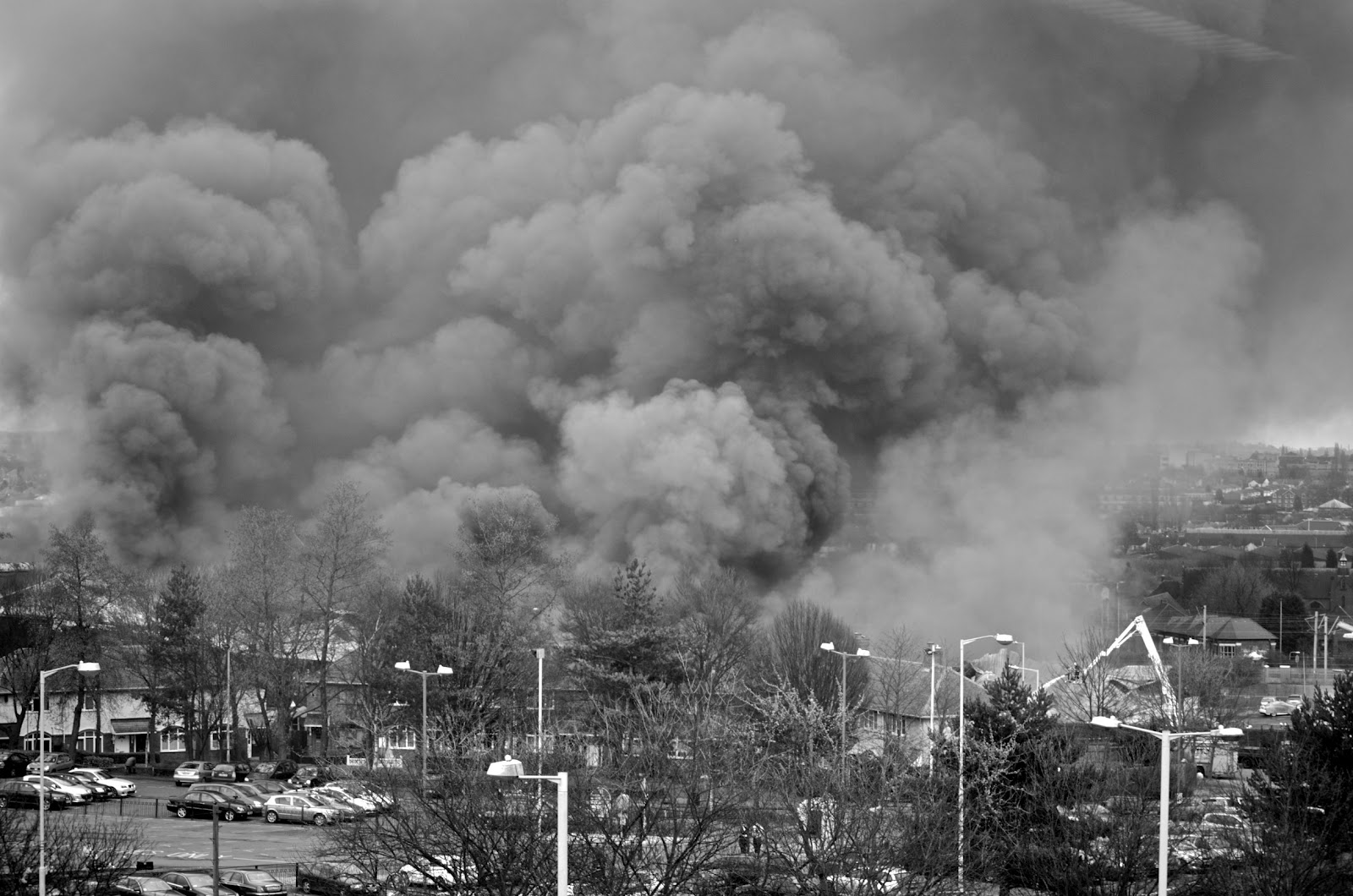
It turned out to be one of the best seminars I've done in a long time: they're a really good bunch and they've all got something good to say. However, a lot of it was drowned out by helicopters, sirens and constantly buzzing text message alerts. I'm used to sirens and helicopters here - part of the joys of urban life - but this was getting extreme. When one student said her boyfriend had heard there had been a terrorist attack on the town, I had to laugh. Any self-respecting terrorist would take one look at The Dark Place and assume someone else had got there first.

The 'terrorist' outrage turned out to be a massive fire in Carver's, the lumber-yard/builders' merchants near the town centre (thankfully not too near my flat): one of the few good things about this place is that it's old-fashioned enough to have a central industrial quarter like towns used to have - not after this, I suspect. So today, The Dark Place truly lived up to its name: here we are, confined to the building ('immured') in hell.

Here are a few photographs: more, including several fire engines etc., here. Click the ones below for larger versions.


Tuesday, 9 August 2011

Angry mob of Vole Readers take their revenge

OK, I said some things about rioting yesterday. And now an angry mob has trashed the betting shop next door and the derelict restaurant beneath my flat (follow #wolverhamptonriots).

Photo by Kenny from KicFM: the Express and Star hasn't got anything up despite its head office being less than 50 metres from the riot. KIC's funding is under threat: go figure.


If you're reading this, rioters, help yourselves to the olives, but please leave the books and records alone.

In all seriousness though, the original cause - the shooting of a man - has been left far behind. We're into the realms of mass psychology. A soup of causes are behind this: pent-up frustration at 'authority', aimlessness, a paucity of proper political outlets, social decay and some latent aggression.

I see a lot of people are claiming that RIM Blackberries are somehow to blame - rather than Twitter or other media - and wonder why that might be. OK, Blackberry Messenger is supposedly encrypted, though you can bet that the police have full access to them. The real reason is very simple: Blackberries are given out free to teenagers on mobile phone contracts to tempt them away from iPhones. Blackberry Messenger is free, whereas Twitter requires a more expensive contract. That's how you can guess the age and economic background of the rioters.

Tuesday, 12 October 2010

And finally…

A few more pictures (rest here). Click to expand.

Got to love pollution when it gives you sunsets like this


The Magistrates' Court


I wanted to get the letters, with no hint of the building

Deliberately out of focus - I think it works.

Shame the 'newspaper' is such a reactionary racist piece of filth.
While taking this shot, I realised that the guy who asked me if I was 'alright' actually meant 'please stop taking photos while I deal crack unless you want to buy some yourself'.