Thursday, 11 July 2013

'A Man of Mystery and Strength'. No, really!

Morning all. It's been a morning of books for me - some good, some, well, interesting. The good books that have turned up in the post are two more Library of Wales reprints, Brenda Chamberlain's The Water-castle and WH Davies' The Autobiography of a Supertramp. I read Davies' book when I was a teenager and remember only being slightly bored but that might be because I was ill in bed and probably not quite mature enough for Davies' tale of destitution in Britain and the US. At that time I was reading a lot of SF (still am) which infuriated my parents, and any book on which I could get my hands. Having 4 sisters amongst the six siblings, this meant that I was way too familiar with the worlds of Malory Towers and other girl-oriented material. So I'm quite looking forward to having another go at WH.

Chamberlain's novel is a classic of that post-war genre, 'literary fiction'. Perhaps 'literary fiction' is wrong: quite a lot of it wasn't literary as in concerning literature, just wordy It's still going, but the readership is tiny and for me it reeks of smugness and self-regard, founded not in anything positive, but in a rejection of genre. This isn't fair, but it's because I read a lot of Iris Murdoch in my twenties. Every novel stuffed with indistinguishable upper-middle-class types undergoing existential crises over the sherry bottle or bridge table, or swapping Oxbridge High Table gossip as though it mattered. There's a good deal of admirable technique and thought, but there's very little interest in the world outside a very narrow social sphere.

Chamberlain's a bit different: her canvas was the wider world and social change, though I do worry that a novel about the travails of a Welsh artist and poet (they say 'write about what you know') travelling Europe with her French husband to meet her aristocratic German ex-lover is going to be a mite insular. That said, Chamberlain's an unjustly neglected stylist, so there's going to be a great deal of pleasure in immersing myself in her language and structure. She was an artist, printer and poet of considerable talent and it's about time she was read again.

The 'interesting' book I was alerted to is a 'paranormal romance' starring a feisty female half-banshee American 'tec and her sexy, smouldering counterpart from the vampire world. Said sexy, smouldering etc. amusingly shares my own meatspace forename and surname, which is pretty rare outside Ireland. Obviously I can't direct you to this work of art as my cover would be blown (though it would take about 0.3 seconds for you to find the text), but suffice to say that the fans are pretty damn enamoured of my fictional doppelgänger:
While the killer eludes her, she does discover handsome Plashing Vole, an investigative counterpart from the enigmatic Otherworlder Enforcement Agency. Mac typically runs her investigations fast and hard, but with Plashing at her side, she’s running this one “hot” as well. But Plashing knows more than he’s letting on—something that could shatter their blazing romance and add Mac to the killer’s growing body count…

And he's just like me:
A man—or something that looked like one anyway—sat at the oak table. He was reading a book. He set the book down and smiled at me. It was one heck of a smile on one heck of a face. A strong jaw covered in five o’clock shadow, dark eyes, and a head of messy black hair set on a very fit, long body.
“Ah, Kiera McLoughlin, I presume?” I thought I detected a slight Irish lilt to his voice, but if he had an accent, it was subtle.

And he runs his literature classes in the same way:
His smile turned into a full-on flirtatious grin. “Why don’t you put your gun away so we can talk? About your interesting taste in books, perhaps.”
I pushed down the temptation to glance at Plashing. Something about the man drew my gaze and made me very aware of how much time had passed since my last date.

Purely for egotistical purposes, I'd be tempted to buy a copy, but this literary feat is only available as an e-book and frankly I can't be bothered. If it's not worth chopping trees down for, it's not worth peering at a tiny screen for. But the fans like it (or me):
Vole was hot and charming
And the hero...well...I loved him from the beginning. The charming grin. The dark hair and blue eyes. His concern for Mac's well being. Everything about him enticed me. Plashing is a man of mystery and strength--two of my favorite things. Oh, and he's uber hot in bed. Love that.
Anyway, after all that excitement I must cool down with a solid bout of re-sit marking. It's not much fun this year, I can tell you.

Wednesday, 10 July 2013

A marker's cry for help.

The relentless searing heat is not conducive to the calm, dispassionate and rational state of mind required to fairly mark (screw you, split infinitive weirdos) re-submitted essays by students who failed the first time round.

And yet here we are and it's not going well. Some have actually managed to perform worse. Others have replaced poor but original work with plagiarised stuff.

For instance: if you're going to plonk in a beautifully modulated, sophisticated sentence amidst standard-to-poor first year work, expect me to Google it. What do you think I'm going to do if I find that the source is Plagiarist.com? What should you have learned from that site's title? For Christ's sake, students, try a little bit harder even at cheating. And while we're at it, if you continuously get the books' titles and protagonists' names wrong, you're not going to thrive.

Oh dear. I am getting a little tetchy. It's either time for a little lie-down or time for another meeting, the second of the day. And some calming music. Here's some Klaus Wunderlich.


I have quite a lot of Wunderlich albums on vinyl. Not in any spirit of postmodern irony. I just like Hammond organs and Klaus Wunderlich. They all cost about 10p in charity shops.

In other music news, I've just bought the 80s Indie compilation Scared To Get Happy. I've already got about half the tracks on the 5 CDs, and I'm quite surprised at the absence of certain bands, like The Field Mice, but it's good fun. It's weird looking across the office to see one of the featured musicians working away: I share a room with The Nightingales' guitarist. Some of the liner notes describe other bands as 'like The Nightingales crossed with X' and I laugh and ask Alan what he reckons. He usually laughs scornfully but it must be weird to be a critical influence on people. Especially a critical influence who gets no royalties!

The other intriguing LP I bought this week is Unreal, by Hebronix, and produced by Neil Hagerty of much-missed Royal Trux, whom Allmusic describe as a 'dissonant junkie nightmare'. It turns out that Hebronix is actually Daniel Blumberg of defunct indie-popsters Yuck. Which surprised me because I saw Hebronix peform recently, supporting Low. As I said at the time, it felt like watching someone having a nervous breakdown with gentle musical accompaniment. I'd have bet serious money that the man on stage had never performed to anyone other than his hamster before, so painfully withdrawn was he. And now it turns out he's a professional musician and the album's been reviewed in all the hip mags.

Is it any good? Yes. It's shoegaze with a bit of laudanum-infused pop. It's interior without being self-regarding or solipsistic, and really rather lovely.


OK. I'm in a slightly more serene state of mind now. Time to get back to the marking.

Tuesday, 9 July 2013

Droit de seigneur

This is an 'interesting' legal judgement which illustrates the knots tied in the messy and unwritten British constitutional settlement. You got rid of the executive monarchy with a Civil War (well done, English yokels), allowing (sadly, in my view) the re-establishment of a constitutional monarchy on the strict understanding – honoured far more in the breach than in the observance – that the royals would shut up, smile for the engraver and later paparazzi and keep their inbred noses out of government, in return for a string of castles, a massive pile of doubloons, deference, flummery and an unbelievable amount of snobbery. A pretty sweet deal, you'd think, though one might easily view it as a gilded cage for some very well-dressed monkeys.

The problem is that the royals are far from normal and some of them believe that they have a right to by-pass the institutions of democracy by pestering government. The state has a legal duty to consult them on any legislation that might affect them, which is pretty much everything: a duty kept secret until recently, because it's such an affront to democracy. Worse, Prince Charles appears to spend rather a lot of time writing angry letters in green ink to government ministers ('it really is appalling'). Being craven, snobbish and power-hungry, ministers from all parties make toe-curling comments about the privilege of receiving said missives, though I suspect their departments issue forth a collective groan whenever a fresh one arrives, replete with a miniature portrait of Mummy in the top right corner of the envelope (or more likely delivered by a flunkey in a tailcoat). But you can guarantee a minister reads and replies to these letters, unlike those we send: they go straight into the circular file that sits under every civil servant's desk.

It breaches the settlement that separated the symbolic power of monarchy from the executive authorities of government which issue de facto from election victories, though de jure from the monarchy. Like any Tory party moneybags, Prince Charles has a direct line to decision makers denied to the rest of us. We're not even allowed to see what he's writing about, despite the strong suspicion that we'll be on the receiving end of whatever conclusions are reached.

So the Guardian made a Freedom of Information request to view the letters. After much legal argument, the Information Tribunal ruled that we do have a right to know what's going on. The government promptly invoked a little-known law that trumps the Freedom of Information Act, a loophole which presumably means that the rule of law – and of a legitimately-established court – means nothing compared with the interests of the powerful. Just the same as when Tony Blair personally halted a police inquiry into British Aerospace bribery because it might upset the customers, Saudi Arabia.

Why are Chuck's letters exempt? Well, here we go down the logical rabbit-hole.
The attorney general said there was a risk that the prince would not be seen to be politically neutral by the public if the letters were published.
So it doesn't matter that Prince Charmless isn't politically neutral, so long as the fact is hidden. The government really believes that it would rather have the heir to the throne secretly lobbying for his pet beliefs (such as homeopathy and terrible architecture) than admit to the public that he bombards them with mad letters. Let's be clear: this is a formal attempt to delude the public.

"This risk will arise if, through these letters, the Prince of Wales was viewed by others as disagreeing with government policy. Any such perception would be seriously damaging to his role as future monarch because if he forfeits his position of political neutrality as heir to the throne, he cannot easily recover it when he is king," Grieve had said.

The government wants us to believe that the prince is 'politically neutral' even though they – and we – know that he isn't. It's all about the narrative, rather than the facts: Grieve's case is that even though the Prince frequently forfeits his neutrality, it's only bad if we oiks find out about it. The courts are being used as part of an elaborate and farcical exercise in make-believe, in which the needs of the population (those of us not protected by high walls, palaces, deference and capacious treasure chests) are entirely ignored.

Even the judges who ruled in the government's favour seem a bit baffled. First they agreed with Grieve:

On Tuesday, the lord chief justice, accompanied by Lord Justice Davis and Mr Justice Globe, dismissed the challenge, finding that Grieve had acted in the public interest in a "proper and rational way".
Which seems bonkers enough: apparently it's in the 'public interest' to retail a fiction to 'the public' about the heir to the throne's interference in government. What's next? Legislation to ban mean parents from doubting the existence of Santa and the Tooth Fairy in the presence of their children? I can see how it's in the Prince's interest to hide the evidence of his ill-informed and arrogant interference, and even in the government's interest to hide the extent to which they'll go to accommodate the demands of the unaccountable hereditary crown, but to describe this as 'in the public interest' demonstrates a hitherto unsuspected talent for satire on the part of the judiciary. 

But then the judges made an interesting observation:
"The possibility that a minister of the crown may lawfully override the decision of a superior court of record involves what appears to be a constitutional aberration," he said. "It is an understatement to describe the situation as unusual," he wrote, adding that barristers could find no equivalent in any other British law. "It is not quite a pernicious 'Henry VIII' clause, which enables a minister to override statute, but unconstrained it would have the same damaging effect on the rule of law."
But it's OK because there's a vague possibility of a court hearing an appeal over ministers single-handedly defying the law to protect those with most of the power, social capital and wealth already. There literally is one law for us, and one for the rulers.

Now run away and play, and don't worry your pretty little heads about what Charlie's whispering into the ears of our elected governments. You just keep tugging those forelocks and everything's going to be alright.  

Monday, 8 July 2013

The beauty of… Stoke?

I may be slightly guilty of exaggerating Stoke-on-Trent's reputation as an unmitigated urban hellhole, just by taking pictures like these. But there's beauty there too, such as at Trentham Gardens, formerly the seat of some posh exploitative aristocratic mine-owners, and now a private pleasure gardens complete with a 'Monkey Forest'. Spotting the occasional depressed-looking simian huddled up against the fence, I find it hard to remember which is the most miserable.

But yesterday I took a stroll in the relentless searing heat and took pretty pictures: of flowers and trees and herons. See them all here, or click to enlarge these favourites.


A trout in the Trent!


Terrapins

Gosling feeding


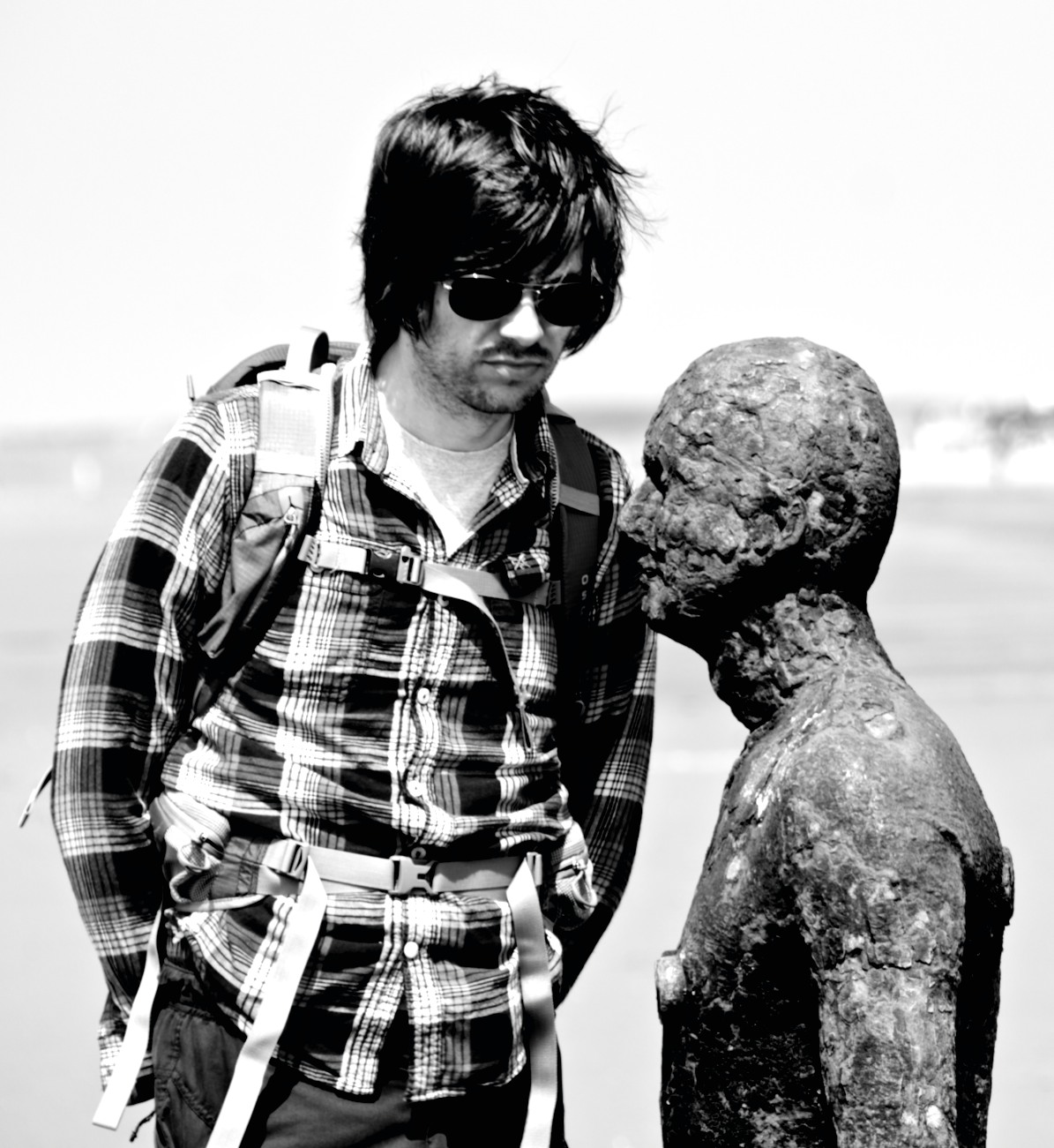
Self-portrait


Turned out nice again!

Those of you with any semblance at all will recognise my title as one of George Formby's catchphrases. I don't need any excuse to quote George, a man whom I deeply admire (his wife Beryl too: anyone who tells Malan, the architect of apartheid to 'piss off' because he is a 'horrible little man' deserves our cheers). But it's especially relevant this week because not only has it turned out nice again – though far too hot for me – but because I visited Formby this weekend. George wasn't actually from there, but his music-hall star father adopted the town's name for his stage act, and lots of George's songs are about saucy goings-on in places like Formby and Blackpool. (It also turned out nice because Dan Martin rode a superb race to win Ireland's first Tour de France stage since Sean Kelly in 1992). Murray who?


Formby itself is like all the Mersey/Lancashire towns: half classic seaside fun, half UKIP-loving retirement town. The beaches are enormous, the dunes high and the red squirrels cavort in the pines. But Formby has something special: lots of Anthony Gormley statues dotted about the beach and immersed in the waves. They're all casts of Gormley's naked body (George would have approved: half his songs are about being spotted naked, or spying on other naked people) in the same pose, but they've aged differently depending on whether the sea or the wind has got to them, and what the locals have done. On their own, it's like a slightly creepy suicide cult. They all stare out to sea, perhaps watching the subaquatic statues' last moments, or admiring the wind farm built subsequently. Gulls perch (and poo) on them; people have painted and dressed them. Lichen festoons them and rust has pitted them, so that they're now individual works of art as well as collective. I like them as statuary and I like the way people have interacted them: giggling at the cast-iron penis, adding a bow tie, having their photos taken.

Here are a few pictures I took (click to enlarge): the rest are here.

I like the effect over-exposure gives here


With this one, I saturated and vignetted to give the effect of using lurid Velvia film like it's 1976


James Bond meets Iron Man


Spotted the heron?

Top quality graffiti: a donkey demanding more ketamine (which was originally an equine drug)

Friday, 5 July 2013

What DO you do between May and October?

'What do you do with those long holidays?' is a question asked by friends, family and even our students, every year. If I had £1 for every time this or similar comments were sent my way, I'd go off on a long holiday for real.

But I don't. Because what we really do is:

  • Write as many of next year's lectures as we can (no, we don't make them up on the spot. Not always. The moving bits on Powerpoint and Keynote are quite tricky). 
  • Re-read the primary texts. Shamefully realise you didn't get it first time round. 
  • Look for new and exciting texts. Contemplate whether students are more or less likely to read them.
  • Read critical work in the field to keep up. Or to sharpen one's sense of worthlessness. 
  • Do some research and/or academic writing. This mostly involves procrastination, frustration, shame and self-loathing. But then, 'being asleep' is the only thing I do which doesn't involve procrastination, frustration, shame and self-loathing. 
  • Go to conferences to test ideas (ours and other academics'). Try to beat your current record of not speaking to anyone at a conference for three entire days. 
  • Keep meeting MA and PhD students who don't get holidays. 
  • Tidy my desk (this takes quite a long time, and comes under the heading 'Self-managed Research and Scholarly Activity). This involves taking several short courses on Stress Management and Handling Bulky Objects. Plus some rudimentary working knowledge of fungal cultures.  
  • Pointlessly drooling over the Moulton website and wondering how many colleagues I'd have to push down the stairs before I got promoted high enough to spend that much on a bike without noticing (currently: I'd have to be a Deputy VC at a minimum)
  • Fill in forms detailing Self-Managed Research and Scholarly Activity.
  • Try to work out how colleagues' Workload Allocation numbers came out at X and mine came out at Y. 
  • Meet the Business Development Unit and KTP staff to sit there dumbfounded while they ask you how you can 'monetise' your friends, 'contacts' and activity. I tell them that I sell my labour to the university which extracts surplus value by charging fees to students. Apparently this is called Not Entering Into The Spirit Of Things. 
  • Write to Print Services, three administrators, a Dean, an Associate Dean and two senior colleagues in search of a scanner or administrator help that will allow me to upload my colleagues' REF output to the HEFCE site. Much of this activity is, fittingly, conducted on Kafka's birthday. 
  • Contact all the people we'd like to give visiting lectures. This is the easy part: they all say yes even when I explain that the only payment will be in the form of Saag Aloo. Negotiating with Rooming while avoiding a Referral to some other department which specialises in Making Things Difficult is the hard part. 
  • Attend the Board of Governors meeting. Yes, I'm now a governor. It's fascinating but I'm not sure I'll get the hang of it before my term of office is over. On the bright side, I may manage to crash the university before then too. 
  • Union casework. Once the constant activity of teaching stops, all the stress is unbottled and people ask for support. If they're very unlucky, they get me ('You think you've got problems…?').
  • Staring at the unread book piles (3 office bookcases, 4 bookcases at home) then checking actuarial websites to see whether I'll live long enough to read them. Then wondering whether I've accidentally bought anything rare enough to substitute for the pension contributions I didn't make in my 20s. (I haven't). 
  • Going to the canteen to play Guess The Vegetable.
  • Occasionally check in on the tumbleweed blowing about my rarely-updated blog, Plashing Vole. 
  • Go for training meetings to organise the UK School Games (Sheffield, September: plenty of tickets available). Plus the county and regional fencing committee meetings. 
  • Attend committees. They don't stop for summer. They expand into the teaching space. 
  • Attend Clearing training. Do Clearing, 7 a.m. to 9 p.m.. This isn't until mid-August. You get a free lollipop and one-to-one tuition for every 10 UCAS points. And valet service on your car during lectures. 
  • Obsessively follow the Tour de France. Acquire technical terminology ('he's off the back of the bus and will be in the broom wagon if he doesn't up his cadence') which will vanish by August 1st.
  • Write references for students. Some will be a pleasure. Others involve looking up said applicant, checking the photograph and wondering whether you've ever met. 
  • Playing odd music loudly on the computer. My office friends are usually tolerant of my choices, but summer's great because they're never here. Something about 'having a life'?
  • Coping with summer heat by flicking through the snowstorm photos I took… in late March!
  • Advise re-sitting students that introducing new primary texts into a failed dissertation 3 days before the re-sit due date is probably not a good idea
  • Marking resits and deferred work. I've just read a superb dissertation, on cultural theory of domestic space. One page cites both Lemony Snicket and Heidegger. Bolder than I ever was at undergraduate level. 
  • Read all the books I've allowed people to believe I'm already familiar with. 
  • Finally do some ironing and work out what exactly is living at the bottom of the sink. 
  • Clean the office mugs. Preferably with the aid of UV lights and one of those boxes with sleeves/gloves they use to handle radioactive material. 
  • Throw away those 2003 second-year essays currently hibernating under the desk. 
  • Fix the bike so that you can think guiltily about going out for a ride rather than dismiss the notion safe in the knowledge that it needs some maintenance first.
  • Update the weakly-humorous satirical postcards and quotes posted on my office door in a laughable attempt to differentiate myself from my fellow shaved monkeys.
  • Answer emails from family, friends and students explaining that no, just because teaching has stopped, we aren't having a massive holiday and can't 'get a last-minute flight to Ibiza this afternoon'.  

OK, so it beats most people's jobs. But you've got to admit: it's not lazing by the pool laughing at the rest of the world as it labours! By the end of summer, I'll need a little rest.

Thursday, 4 July 2013

Democracy, Army Style

So the Egyptian military has overthrown the democratically-elected government of Mohammed Morsi, arrested the President and many of his senior supporters, suspended the constitution and taken control of the state, supposedly in response to the cries of the people whose revolution has been betrayed by the government.

I guess this is what counts as complicated. Morsi's government was democratically elected, but wasn't behaving in a particularly democratic way, if like me you believe that democracy is more than elections allowing the majority to impose its will on minorities. It's true, too, that the Morsi government was very keen on locking up journalists and very poor at fixing the economy. One of its lesser-remarked failures, however, was its total refusal to deal with the army's massive economic role: it apparently controls at least 15% of the economy through a network of businesses, and certainly wasn't going to countenance the suggestion that armies are the servants of the people embodied in the state.

The other problem with the Egyptian army is that it's a creation and client not of the Egyptian people, but of the United States, which provides it with massive amounts of money and materiel. As usual, the Western powers talk a lot about democracy but never, ever, mean it, particularly with regard to the Arab and Eastern worlds. What the West wanted in years gone by was anti-communist dictatorships which kept the oil flowing to the West and stopped the Arab man in the street from declaring all-out war on Israel. The anti-communist bit has been dropped but the rest remains central to global realpolitik. In pursuit of these aims, the democratic impulses of the East, the rights of women, religious minorities and ethnic minorities have been deliberately ignored. Saddam Hussein, Gaddafi (sometimes), Assad and many others were the beneficiaries of a policy which traded human rights for geopolitical aims. I remember Tony Blair making a stirring speech about bringing democracy to the East, as part of the build-up to war. So I wrote to my MP asking when we started bombing Saudi Arabia, which had a far worse human rights and democratic record than Iraq (it still does). The reply was a contemptuous brush-off.

So anyway, my feeling is that the Western states are very happy to see this coup. They'll have advised the Egyptian army to employ some rudimentary PR: a few populist gestures here and there, some journalists released, some bread subsidies, perhaps unmask a few convenient Islamist Terrorist Plots so it looks like the aims of the Egyptian street and that of the army are aligned, but the shine will tarnish pretty quickly. The army doesn't want democracy for the same reasons as the West: it assumes that Egyptians are religious zealots, and it doesn't want to destabilise the cosy global order, or lose its privileges.

So I think the people of Egypt are deluded if they see an army coup as a necessary stage in the pursuit of democracy. Morsi was a bad president but he wasn't a dictator. The demonstrators should sup with a very long spoon: supporting a coup against someone you don't like tacitly authorises the next coup, which might be against someone you do like.

Ask yourself this: how many times have military coups lead to democratic governments? I can think of very few indeed, though I'm hoping that you can provide some more. The oldest example is one that didn't really happen. In the aftermath of what's erroneously called the English Civil War, the Army began to feel that the Parliamentary leadership wasn't nearly radical enough (they'd even tried to settle with Charles I rather than overthrow the monarchy) , and in fact wanted to establish a Republic of the Squirearchy rather than a true, levelled democracy. They held a series of debates (including the Putney Debates), published pamphlets and proposals, and moved menacingly close to London, until Charles I's escape, coupled with a Cromwellian crackdown and the payment of wage arrears, closed down the rebellion, very sadly in my view.

The only recent democratic military coup was the Carnation Revolution of April 25th 1974, in which the Portuguese Army, radicalised by a cadre of leftwing, anti-colonial officers, peacefully overthrew the 40-year dictatorship of Antonio Salazar, Portugal's manifestation of Francoist fascism. The people flooded the streets in support of the Army, symbolised by handing them red carnations (for communism), and the Secret Police's resistance was quickly ended. Democracy was established within two years and Portugal's colonies set free.

Is this the glorious future which awaits Egypt? Don't hold your breath.

Wednesday, 3 July 2013

The commodification of rebellion

Remember Bill Hicks ranting on quite profanely about marketers' identifying even the anti-marketing demographic?

Just to jog your memory:


I don't disagree. In fact it's got worse. As dissent has moved into social media, counter-hegemonic forces are more dependent on the very structures and corporations we oppose than ever. That awful waste of organs Louise Mensch reckoned that any leftwinger who drinks coffee and uses an iPhone is a hypocrite: here's the clip, followed by Ian Hislop's very sensible rejoinder and Jeremy Hardy's very funny riposte to that level of thinking:


It's a commonplace that twentieth-century protest has largely been the preserve of the affluent classes, particularly students and the bourgeoisie. The same criticism has been levelled at the Brazilian protests this week.

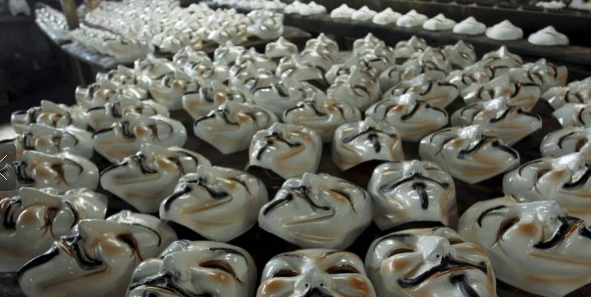
And yet… I was given one of these masks.


Maybe you have one too. They're seen at every protest rally in the world now: as a signifier, they're a huge success. Wearing a Guy Fawkes mask signifies your solidarity with the oppressed anywhere in the world, against the machinations of repressive governments, vampiric corporations and sinister cults. But what are the mask's origins? It's actually graphic novelist Alan Moore's second semiotic hit: he adapted the yellow Smiley Face from American advertising campaigns for Watchmen, and its un-nerving blandness came to represent Ecstasy culture and the Summer of Love which so threatened the UK Government. 

The Fawkes mask first appeared in Moore's graphic novel V for Vendetta, designed by illustrator David Lloyd, in which a libertarian hero sows the seeds of rebellion in a cowed populus by committing stylish acts of terrorism from behind the mask. Finally, he uses the quality services of parcel delivery companies to get Fawkes masks and costumes to every household in the country. Emboldened by the subversive message and the safety of anonymity, they congregate to watch the Houses of Commons destroyed by V in his last, self-sacrificing act. There's no space for individual heroes in the new country: instead, everyone behind the masks must become their own heroes. As the fireworks soar and Parliament explodes, the people take off their costumes and take charge of their own destinies. 


And there it would have rested, had not Anonymous decided that public face of their decentralised, libertarian actions against surveillance, secrecy and litigiousness should be the Fawkes mask. Which is OK, really. The battle against state and corporate power is fought on an uneven battlefield (Snowden's revelations about the NSA and GCHQ have proven that), and anonymity is a vanishingly rare possibility. From there, the use of the mask spread from the virtual to the actual. 

But it's not that simple. The comics world is notoriously cut-throat and litigious. Alan Moore long ago disassociated himself from the films of his work and refused to accept any money. The rights to the comics are tied up in perpetuity with DC, as long as they keep them in print, however tiny the print run. Which throws up interesting questions, such where do the masks come from? Who makes them? Who profits from the growth of this revolutionary product? 

The simple answer is that every time a revolutionary buys a Fawkes mask, a near-slave in China or Brazil makes them for Rubies Costume Company and Warner Brothers/DC profits from them. While the mask symbolically promotes resistance, the purchase of the mask reinforces the status quo. And it's not just 'V' masks. A few years ago, I was given a 'Commie' costume: a stick-on goatee and moustache. It's available on all monolithic online retailers' sites.


Because I read every word I can get my hands on, I looked at the small print. Made in China. As are the Anti-Establishmints made by the Unemployed Philosophers' Guild apparently to promote the values of 1789:


They're very tasty. And the 'tache and beard transform my pasty fat face into that of a hardened defender of the proletariat. And yet, and yet. I have this image of a Chinese peasant corralled into a factory by a state which at least retains the discourse though not the practice of Communism, to spend her life churning out products which actively mock the ideals for which people have shed their blood in their millions. The V mask is a mass-produced piece of plastic which reduces the specific aspirations of millions into a generic statement of vague dissent. The Commie Mustache and Beard turns the complexity of Lenin or the murderousness of Stalin into a throwaway gag, dependent on the exploited labour of those who have been sold by communists into the hands of capitalists. The Anti-Establish Mints don't extend LibertĂ©, FraternitĂ© and ÉgalitĂ© to all: they turn those sentiments into a post-modern joke at the unseen expense of the real proletariat. It's a smug and reactionary product. I suck one on the way to Revolution, the Cuban-themed bar owned by a former Tory MP who'd be horrified by an actual revolution. 

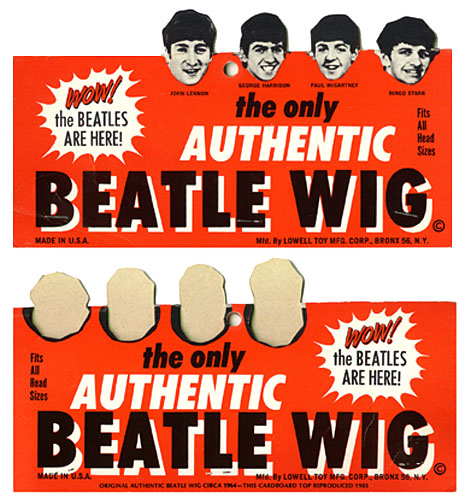
It's a truism that all youth movements are quickly appropriated by capitalism: both Beatles Moptop wigs and Punk Mohican wigs were on sale within weeks of the scenes' popularity reaching a peak: arguably the moment was over once you could buy a stick-on Mohican. Perhaps it's just particularly galling that the signs of anti-capitalist resistance are so easily appropriated, hollowed-out of meaning and re-sold back to the movement. I don't know: perhaps I should just relax and assume that the multiplicity of meanings immanent in these objects keeps them meaningful. But I know I'd rather everyone thought up their own devices rather than allow the market to shape the discourse, even though I happen to think the Guy Fawkes masks are beautiful. 

If the enemy controls the ways in which dissent is communicated, then there is no meaningful dissent. 

Tuesday, 2 July 2013

Hot Air for Uppal

I wrote to my MP about the UK Government's 'relaxed' attitude to environmental emissions and climate change, asking him to vote for a legally binding carbon target as part of the Energy Bill. As expected, he sent me a long, disingenuous letter which claimed that The Market Will Provide.

New stats are out. UK emissions rose by 4.5% last year, even in the depths of a recession, and without counting emissions outsourced to China and other manufacturing centres. We've missed our 2011 renewable energy commitment and have no chance of meeting our 2020 targets.

Cue another weary letter to Mr Uppal, complete with statistical sources, with no serious expectation of a meaningful response.

Dear Mr Uppal,thank you for your reply to my letter about the legally binding carbon targets.
Could you reflect again on this issue, given that the UK's emissions actually rose by 4.5% in 2012 (without counting 'outsourced' emissions), and the assessment that the UK is 25th of 27 EU member states in renewables contributions, is the only country which failed to meet its interim targets, and is calculated to miss its 2020 target set out in the 2009/28/EC Directive, otherwise known as the RES Directive?

What specific steps will the government take to address these two failures?
Hugs and Kisses,Plashing Vole.

Despite this - can I ask you all to write to your MPs along the same lines?


Oh yes: here's his latest Parliamentary humbug:
The hon. Gentleman is making some partisan points, so I want to add balance to the debate. I have been poor—dirt poor. I used to share my bedroom with my siblings and cousins. By modern descriptions, I would have been classified as homeless. His main argument is about foreign capital coming to the UK and London. Does he not think that that is symptomatic of people recognising that we have a Government who are making credible decisions and creating financial stability?
Not sure whether I should weep or laugh. 'Credible'? With borrowing sky-high, deficit reductions postponed to 2018 and the poor getting poorer and poorer, under a government determined to evict anyone with a box room and clear London of the labouring classes, while reducing taxes for the millionaires (he's too modest to mention that he's a millionaire, from property speculation). He is utterly despicable.  

Monday, 1 July 2013

Oh happy day!

You might be surprised, given the Eeyore-ish tone of Plashing Vole (and the dystopian nature of the world at the moment), that I'm in a thoroughly good mood. 

'Why so happy?', I hear you ask?

Well, the weekend was good. I went to hear the CBSO and CBSO Chorus under Andris Nelsons perform Beethoven's 8th and 9th Symphonies. The 8th is pretty, the 9th is the one you can all hum and perhaps even sing. Because it was the CBSO and Chorus, it was beyond magnificent: they really are amongst the very best in the world. I don't think this was their greatest performance, but that's only because I saw them perform the Britten War Requiem recently and came away thinking that I'll never see a more consummate performance of that or any other piece. 

After that, I had the pleasure of ignoring the Rolling Stones and Mumford and Sons at Glastonbury, tuning in instead to Public Enemy, who really haven't aged gracefully, for which they deserve our admiration. While the Stones churn out songs written before I was born, like a particularly charmless jukebox, PE are still righteous. 


Mumford and Sons depressed me beyond words: imagine giving your band a corporate name and then churning out music which is – at best  – unobjectionable. I remember a few years ago the NME dubbing a bunch of bands 'The New Boring': Turin Brakes and Co. And they were: pretty tunes, competent musicians, sensitive lyrics, but absolutely nothing to get the hormones racing. 

Compared to Mumford and Sons, The New Boring band were death metallers. Compared to Mumford and Sons, The Weavers sound like Slayer. I found myself wondering how the line-up was constructed. In the end, I decided that the schedulers channelled the spirit of David Cameron or Michael Gove and asked themselves who their PR advisors would tell them to pick on Desert Island Discs: nothing offensive, but a nod to 'classic' rock, someone female and a young cool band. Remember Gordon Brown claiming to like Arctic Monkeys? 

I'm 37 and yet I can now claim quite seriously that I'm too young for Glastonbury. It's only to be expected: only the Stones' generation can afford Glasto tickets now. It's not for the likes of us.

But I digress: I avoided them all and stayed happy. And then Sunday saw the start of the real summer: the Tour de France. I like cricket. A five day match with no firm conclusion is fine by me. So a three week orgy of tactical battles, backstabbing, team orders, injuries, duels and maddened spectators is basically my idea of heaven. Oh yes, and amazing bikes for me to drool over. The opening stages in Corsica this weekend were brilliant: organisational chaos and strategic errors led to unheralded riders winning, the unlovely Sky juggernaut getting badly caught out, and lots of doomed-but-noble breakaways. Sporting perfection, even if lots of them are still on drugs. 

The last element contributing to my good mood is today's event: our school's Staff Research Conference. It's one of the best days of the year: lots of my colleagues getting together to share what we've been getting up to (or not) over the course of the year. It's relaxed, friendly and intellectually searching. I've been to papers today on the Seren Books series retelling the Mabinogion medieval Welsh myths (which I've taught with some success to students here); a Foucauldian critique of my own university's pedagogic unit's critical approach; a presentation of doctoral research into HE academics' resistance to 'technopedagogy' (very weird seeing quotes from my own interview on screen under an assumed name). Then I presented with my colleague a chapter we wrote on the presentation of jazz and masculinity in some contemporary novels: Jackie Kay's Trumpet, Jim Crace's All That Follows and Alan Plater's the Beiderbecke Trilogy


I've never done a joint paper before, and really enjoyed it. Very good questions too, mostly jazz fans denying that their particular sub-genres count as jazz in the ways we mean. After us, Polly gave a fully illustrated talk on 'Naked Masculinity: Fear, Freedom and Eroticism' which was, well, eye-opening. Now I'm in the politics section: one colleague gave a fascinating philosophical analysis on theories of loyalty in politics, and Eamonn's finishing with an archive-driven examination of the secret back-channels between the IRA and the UK Government between the 1970s and the late 1990s. It's fascinating: naming names and showing us historic documents such as the famous hand-written note to the UK state announcing that the conflict was over and the IRA needed help ending the war. It was used by UKG as the 'start' of the peace process (until forced to admit that negotiations had been going on for two years). McGuinness says it's a fake and he never sent it, but it seems that the note was a summary by Dennis Bradley of more general discussions, with the plea for help added. Are there multiple notes? The note has a '4' at the top: was this Draft 4 or part 4: if so, what were parts 1-3? Additionally, the Link personalities seem to have been adding things to what the Republican movement said, much to the displeasure of the Republicans when they find out what the Link people are up to. Murky, fascinating stuff. 

And to top it all off: wine reception next!

Result: a Vole in a sunny disposition. It won't last…

Friday, 28 June 2013

A day of random delights

Morning all. I feel like a broken man. Went for a swim before work. Got in to meet a student to talk about his work. He didn't turn up. Complained to the Press Complaints Commission about this Mail on Sunday article. The scum.

Now I'm going to read a friend's PhD chapter and another friend's MA dissertation: both fascinating. One's on Lewis Jones, the Communist miner, activist and novelist on whom I wrote my PhD. The other is about America's initial involvement in the Pacific rim in the late nineteenth-century.

The soundtrack of the day is beautiful Welsh-language indie and electronica: I bought the lovely coloured double 10" releases Y Record Goch and Y Record Las (The Red Record and the Blue Record) and they are corkers.

Here's the lovely Kraftwerk-influenced 'Bish Bash Bosh' by Dau Cefn.

Thursday, 27 June 2013

Uppal: a lesson in evasion

Those of you with nothing better to do might recall that I rather suspected Paul Uppal of telling porkies in Parliament, given that he always manages to find constituents to quote who completely agree with him, and speak in fully-fledged parliamentary language.

The latest excrescence was his claim that young constituents feel completely trapped by state subsidies.

My constituency has a rich industrial heritage, but many young constituents come to me and say that at so many points in the history of the constituency they have been dependent on the public purse and whatever quango or mechanism. I think people are looking forward to some aspect of private sector entrepreneurship to provide a route out of the poverty that exists in so many of these industrial constituencies.

I was intrigued. Who are these kids? What do they mean? How many of them are there? Are they referring to the scrapped Educational Maintenance Allowance, which helped people stay in school or college? The one the Tories scrapped? I think we can all imagine what 'private sector entrepreneurship' routes out of poverty means: it means more children up more chimneys. Let's not forget, of course, that the Conservative Party opposed the National Minimum Wage and some of its MPs want it abolished.

So I wrote to Mr Uppal on this subject, and also took the opportunity to ask him to release the constituency's unemployment figures since he took office. All the other MPs in the city do this: it's collected and sent to them by a government agency.

I also asked him, given that he'd mentioned the new Jaguar Land Rover engine plant in the city, whether it was an example of private sector entrepreneurship, or heavily-subsidised by the local taxpayers through the area's councils.

Here's the letter I sent him:


Dear Mr Uppal,
I note your recent speech in parliament expressing the desire of 'many young consituents' to escape dependency on the public purse and quangos. Could you please enumerate to me how many young constituents have expressed this desire and how they experienced this 'at so many points in the history of the constituency' given that they are 'young'. To what organisations and mechanisms do you think they are referring? 
Secondly, could you please make public the unemployment statistics for the constituency since your election in 2010? I gather that constituency break-downs are provided for each Member of Parliament and that other MPs in the city make them public. 
Finally, I note that the biggest investment in the city for some years (Jaguar Land Rover) was achieved through the incentives provided by Wolverhampton City Council, South Staffordshire Council, Staffordshire County Council and Advantage West Midlands. Given your professed opposition to quangos and state subvention for the private sector, will you be lobbying for an end to this taxpayer support?
So: I asked him for details on these youngsters' claims; the constituency's unemployment profile; and some recognition of the state's role in landing the area's only big investment.

Can you imagine what the reply was? Honest and straightforward?

Don't be silly.

On the question of what exactly these youthful idealists had to say about being 'trapped' in dependency:
I have met with [oh dear: only Americans and illiterates add the preposition] many young constituents during my weekly surgeries and my frequent visits to schools… the future of the city is often discussed… The views of many young people in the constituency are reinforced by the City Council's 'City Strategy'. Their assessments highlight the city's over-reliance on public sector employment, the lack of private sector jobs, and the gap between skills and those required by the emerging knowledge-based economy'. 
So that's bollocks. Uppal's surgeries are by appointment only, and held during the week: I can't see many kids skipping school to earnestly express their Ayn Randian opposition to child benefit and the EMA. I note he can't say how many have expressed these views to him, though I rather wonder if his sample runs to the two slightly creepy Young Tory interns he uses as muscle on his rare public appearances.

I can't think why the city is over-reliant on public sector jobs. Oh hold on, I can. Is it because successive governments – not solely but mostly Tory – completely abandoned the industrial areas while pursuing a policy of making Britain a land fit for Hedge Fund Traders? Might it be because the Tory industrial complex shifted all the jobs overseas where they can pollute and exploit out of sight? Could it, even, be connected to the fact that the Tories have utterly wrecked this country's economy? Could be, you know. Could be.

OK, question 2: what's happened to unemployment since Paul Uppal became the MP? Simple question. He just has to photocopy the quarterly briefing sent to him.

Oh no.
The employment rate for Wolverhampton fell significantly since early 2006, at least a year before the first impacts of the recession were felt in other areas. During the three years between 2007 and 2010, nearly 4000 jobs were lost. The unemployment rate in Wolverhampton South West is currently 9.1%. 

Just a couple of points here. Firstly, he shifts neatly from 'Wolverhampton' to Wolverhampton South West: neatly avoiding the specific constituency's profile: it's far from clear that unemployment was rising in the constituency between 2006-2010. Then there's the abrupt shift from trends to a single figure. It's awful that unemployment is 9.1%. But Uppal's carefully evaded my question. I wanted to know what the rates were in the period since he was elected. Instead, he's carefully claimed that the place was doomed by the previous government, without letting on that unemployment has been steadily rising since he took office. He has personally made the situation worse for the people in his care, employed and unemployed, while getting richer and richer himself.

That, ladies and gentlemen, is what we call disingenuous.

As for my question about state subsidies for business: he didn't weasel his way out of that one. He simply ignored it. Silence. Not a word.

He's got to go.


The usual dispiriting Uppal rubbish

I wrote to my MP, Paul Uppal, asking him to vote for an amendment setting a maximum carbon production ceiling target by 2030. 

He voted against the amendment and wrote back with the usual boilerplate rubbish dictated by Tory HQ. Apparently rather than identifying a maximum we can safely pump into the atmosphere, we need to consider 

prevailing circumstances at the time, and in the context of the economy as a whole. 

This means, of course, kicking the can down the road and ensuring that the big polluters continue to pollute. What these Tories cannot comprehend is that there's a massive economic opportunity in building a renewable-energy economy. All they can see is their donors' perspectives, allied to their American-style rejection of climate science in its entirety. 'The context of the economy as a whole' actually means not impinging on the obscene profits made from wrecking the planet. But we all know what happened to other sectors of British industry that refused to invest in new technology: look at the decline of UK cars, aerospace, ship-building, electronics, chemicals and heavy industry. All gone to Japan, then China and soon Brazil and India. The same will happen with energy. 


Uppal tells me that:

The government is already pushing through ambitious reforms to overhaul existing old fossil fuel plants and replace them with new low carbon generation. 

It isn't. It plain isn't. Coal burning for power generation has increased over recent years from 31% of the energy mix to 40% because coal is cheap. The 'ambitious reform' to which Uppal refers is a failed competition to get Carbon Capture and Storage to work in one or two power stations. It hasn't worked and isn't likely to: it's just a little present to the coal burners rather than a serious idea. 


So it's clear that free-market solutions don't work: given the chance, polluters will opt for the cheapest substance, which happens to be the nastiest. Corporations don't invest in the future: they strip-mine the present because nobody gets bonuses and dividends for being responsible.


What else does Uppal say?

…new Contracts for Difference… will help developers secure the large upfront capital costs for low carbon infrastructure
This is Uppal's way of admitting that capitalism doesn't actually work. 

If you've never heard of a Contract for Difference, you're lucky. It's a nice shiny technical term for a bloody big bribe, or subsidy. Like with the railways, we've decided that we want an economic system which looks like the free market but is actually a state-subsidised racket. We need renewable energy. The government wants nuclear power stations. The private sector will build and operate them, but they can't build them on time or on budget (Flamanville and the Finnish one are both coming up to a decade late and the costs have soared into the stratosphere) and they can't operate them profitably, mostly because coal is so cheap. So they demand Contracts for Difference to cover the gap between the price at which they sell electricity and the price (plus profit) at which they produce electricity. 


The simple answer, of course, is for governments to own and run electricity generators. It would be cheaper: it's never been easier for governments to borrow money. But that would mean admitting that markets aren't the solution to everything. 


The other solution of course is to tax carbon, so that the cost of environmental damage is built in. But then we'd have to take climate change seriously, and think about changing our lifestyles. 


I won't bore you with the rest of Uppal's letter because it's misleading, disingenuous bullshit. He mentions the Green Deal, which is a) a bit of scam and b) a failure, and the Green Investment Bank, which isn't a bank and has a piddling amount of money which I strongly suspect will be wasted. It's just an attempt to promote markets rather than tackle climate change. And oh yes, it's only funded until 2015.


So let's skip to the end of Uppal's missive:

I feel that the Government is already taking the necessary action to decarbonise Britain's energy supply… the Government is determined to achieve our carbon goals, and will continue to work towards a low carbon future. 
OK. Let's put that to a nice, simple test. What happened to the UK's carbon emissions last year? 
The UK's emissions of climate-warming gases surged in 2012 as cheap coal replaced gas in power stations, official data revealed on Thursday. 
The UK's carbon dioxide emissions rose by 4.5% from 2011-12, with coal use in power stations jumping by 31%. Coal prices have dropped significantly as the US has exported the coal it no longer needs at homedue to the shale gas boom 
But don't worry, we've got tough targets. Haven't we?
The UK is on track to miss its carbon targets in the 2020s, the government's advisers on climate change warned on Wednesday. Efforts to cut emissions are not happening quickly enough, and a looming "policy gap" will lead to a shortfall in the investment and infrastructure needed for a low-carbon economy, they said. 
But that's just a parliamentary report and will of course be entirely ignored. Because we're not dealing with facts here. Just more of Uppal's lies and evasions. Which is why he's climbing the greasy pole with alacrity.  

Wednesday, 26 June 2013

If you read this, you'll be on a list.

Afternoon, readers.

I'm afraid that despite the momentous events of the week, I'm slightly devoid of pungent opinions. Too much going on at work. Mostly boring to the outside world, and some very sad, such as my friend's stroke. No news on that front today. Instead, I've been in meetings about pensions (generally bad news) and the regular union negotiating committee session. An interesting mixed bag as always, but in general a depressing view of how the senior management operates. However, I've now been elected to the university's Board of Governors, so I'm looking forward to seeing how oversight operates from that perspective.

Most of the week's outside news doesn't surprise me in the slightest because I read the newspapers and I'm a socialist. Police spying on dead mens' families? UK security agencies hoovering up every single communication? Law-abiding campaign groups riddled with police informers to the extent that cops wrote their material, in some cases kept the organisations going, and fathered children with activists before disappearing? Cops conducting spying missions against their perceived political opponents? Awful, awful behaviour. But not in the least surprising.

Now and then British newspapers publish stories about Over There. Terrible countries – Iran, North Korea, Russia, East Germany etc. – in which governments vet educational materials, spy on their citizens, operate secret courts and possess fearsome secret police forces which serve the political establishment rather than the people.

The plain fact is that Over There is really Over Here. Our schools are being handed over to corporate interests without a murmur of complaint. The UK has secret courts, boringly disguised as Closed Material Procedures. The Education Secretary and the Prime Minister personally write the curriculum, particularly for History because those with no memories have no means of cultural resistance. Anyone with any knowledge of leftwing politics, Northern Ireland (or indeed Scottish and Welsh nationalism) is well aware that beyond helping old ladies cross the road, the police services in this country are the reactionary lackeys of the ruling classes. In previous decades, they were merely corrupt, especially the Metropolitan Police, but they became politicised by the Miners' Strike (150 arrests at Orgreave: no convictions as it turned out that the cops faked their statements), Hillsborough, by Northern Ireland and by the Thatcher Government, by the shrieking neofascism of the Sun and the Daily Mail. Any light shone on Special Branch and its sub-groups, and the Security Services, reveals bodies with absolutely no political neutrality. They aren't interested in right wing, capitalist and racist subversives: their enemies are environmentalists, anti-racists, ethnic minorities and the poor. The permanent state is authoritarian and capitalist and its foot-soldiers operate to ensure that the arms dealers, bankers and uniformed services are never scrutinised, let alone overseen by the likes of us.

All this is one of the reasons I read science fiction: so much of it extrapolates from the assumption that state and corporate forces will always do whatever's technically possible, regardless of the law. Given the means to record every tweet, email and phone call, they will. States – of any complexion – fear their citizens, and rightly so. They aren't scared of each other in any real sense, they're scared of us. Luckily for them, most of us don't care in the slightest. Politics is boring and we're busy. We accept reassurances like Hague's that only guilty people are monitored: something that's not technically possible and it assumes that the natural state in which to exist is the Panopticon: that all instincts for privacy are automatically suspect.

Thomas Jefferson said that a situation in which the people fear the government is tyranny, whereas liberty exists when the government fear the people. He's now wrong. We don't fear the government: hegemony has manufactured consent, largely by persuading people that the subversives are Them: the Muslim bomber, the environmental activist, the Edward Snowdens of this world. In the modern tyranny, we've taken the free gifts: Twitter, Gmail, The Voice, CCTV, credit cards and mobile phones, without question. In the modern tyranny, the government fears us, and it acts on those fears to the fullest extent of its capabilities. The state doesn't have specific fears (the Irish, the ALF, Islamic terrorists). It has one general fear: that there are things it doesn't know. And yet when it comes to things it should know, it fails every time. MI6 was as shocked as everyone else when the USSR collapsed. Nobody knew the banks were lying, cheating and stealing. And yet the Met knew whether or not the Lawrence's friends had ever been on demonstrations or joined political parties.

I've always assumed that any campaign group is riddled with police officers, however anodyne the cause. They aren't detecting crime or disorder: they're conducting political surveillance. There's no other earthly reason to spy on Stephen Lawrence's grieving parents other than to destroy the credibility of their criticisms of the police. Perhaps I'm overly paranoid, but it does seem like the state and corporate bodies (this week revealed to have bugged and hacked their way across the country without any legal action at all: instead, the cops covered it up). Stand up for badgers and you'll be infiltrated before you can staple a placard, but Corporate Security Providers have carte blanche to do whatever they want: and yet last time I looked, business had bankrupted the country.

I said earlier that I'm a socialist. This means that I'm saddened by this state of affairs. In a socialist society, governments are a good thing. They're set up by the people as an efficient and fair means of distributing wealth and protecting themselves. Socialists don't trust corporations to do it, and believe that collective action is better than individualism. But because governments have power, expertise and stability, they attract the wrong kind of people and develop a tendency towards omniscience and omnipotence. Smarter socialists are aware of this, and believe in distributed power: grass-roots decision-making and the like. Some tend towards municipal socialism, others towards anarchism. But I still think we need governments. I've just read Cory Doctorow's interesting novel Down and Out in the Magic Kingdom (he's posted it for free here, though I bought the book), which posits a society that's replaced money with accrued respect, and 'ad hoc' coalitions running everything from Disney Land to transport networks. It's a lovely semi-anarchist vision, but it's based entirely on the assumption that there are unlimited resources and – for the most part – general good will: the novel cheerfully just states that energy and resources are infinite and carries on from there. Back in the real world, we need democratic governments to referee the competing demands of its citizens (or you just need to put me in charge). But this is a Utopian vision: what we actually get is governments behaving oppressively as a means of self-preservation, or because it openly declines to serve the interests of its people, preferring instead to (in the case of the UK government) serve the US and the markets.

Radio 4 is currently running a series of programmes about British Dystopian entertainments called Dangerous Visions. Seems to me we don't need to imagine them. We're in it.